Quick answer
To move a gun safe, empty it completely first. Firearms and ammunition come out, and movers will not transport ammunition. Lock the door, unbolt the safe from the floor, measure the route, and protect the floors. Because of the weight, leave the lifting to an experienced crew with a rated dolly, straps, and ramps.
In this guide
- Why moving a heavy safe is dangerous
- Empty the safe first: firearms, ammunition, and valuables
- How to prepare a safe for moving
- How to move a gun safe: plan the route, stairs, and floor
- What gun safe movers use
- Can you move a gun safe yourself
- Setting the safe up in the new home
- What to tell your mover about the safe
- Frequently asked questions
Why moving a heavy safe is dangerous
A gun safe is steel plate, a thick door, and often a layer of fire-resistant lining. A full-size model weighs several hundred pounds empty, and large ones weigh far more. All of that sits on a small footprint, and with the heavy door on the front, a tall safe is easy to tip.
That combination is what makes moving a heavy safe risky:
- It cannot be caught. Once a safe starts to tip or slide, no one is strong enough to stop it
- It concentrates weight. Stair treads, thresholds, tile, and truck ramps all carry the load on a small area
- It has nothing to hold. Smooth steel sides offer no grip, and the handle and lock are not lifting points
We will be direct about it. A full-size safe is a job for an experienced crew with equipment made for the weight. Your part is the preparation, and there is plenty of it.
Empty the safe first: firearms, ammunition, and valuables
A safe should never be moved with anything inside. Contents add weight, shift in transit, and can be damaged or lost.
Ammunition. Movers will not transport ammunition. It is on the list of hazardous items that cannot go on a moving truck, along with fuel and propane. See what movers won't move for the full list and plan to handle ammunition yourself.
Firearms. Remove every firearm from the safe before it is moved. Mover policies on firearms differ, so ask yours before moving day, and many owners choose to transport their own. When moving firearms and ammunition, remember that the rules for transporting them vary by state. On a long-distance move, the laws of the states you pass through can matter as well as the laws where you start and finish. Check the current requirements with each state's official sources, or with an attorney, before you travel. This article is general information, not legal advice.
Everything else. Documents, cash, jewelry, and backup drives should travel with you in your own vehicle.
How to prepare a safe for moving
- Find the weight and size. Look for the model label inside the door or check the owner's manual. Measure the height, width, and depth, including the handle
- Take out loose interior parts. Remove shelves, racks, and door organizers that can slide. Unplug and remove dehumidifiers and lights
- Unbolt it from the floor. Most safes are anchored through holes in the bottom. Remove the anchor bolts ahead of time, not while the crew waits
- Close and lock the door. A door that swings open mid-move throws the weight forward and can crush a hand
- Protect what sticks out. Pad the dial, keypad, and handle. If the handle is designed to come off, take it off
- Keep the keys and combination with you, and put a fresh battery in an electronic lock so it opens at the other end
- Clear the path from the safe to the door. Move furniture, rugs, and anything fragile along the way
How to move a gun safe: plan the route, stairs, and floor
Walk the whole route at both homes with a tape measure.
- Doorways and halls: Compare each opening to the smallest dimension of the safe. Note tight turns. Taking a door off its hinges can gain the inch you need
- Stairs: Count them and look at their condition. Moving a safe up or down stairs is the most dangerous part of the job, and it is where specialized equipment and experience matter most
- Floors: Tile can crack and hardwood can dent under a loaded dolly. Sheets of plywood or hardboard spread the load and protect the surface
- Outside: Gravel, grass, slopes, and steps between the door and the truck all change the plan
Think about the destination too. A concrete slab at ground level is the simplest place for a heavy safe. If you want a large safe on an upper floor, ask a qualified contractor or structural engineer whether the floor can carry it before moving day.
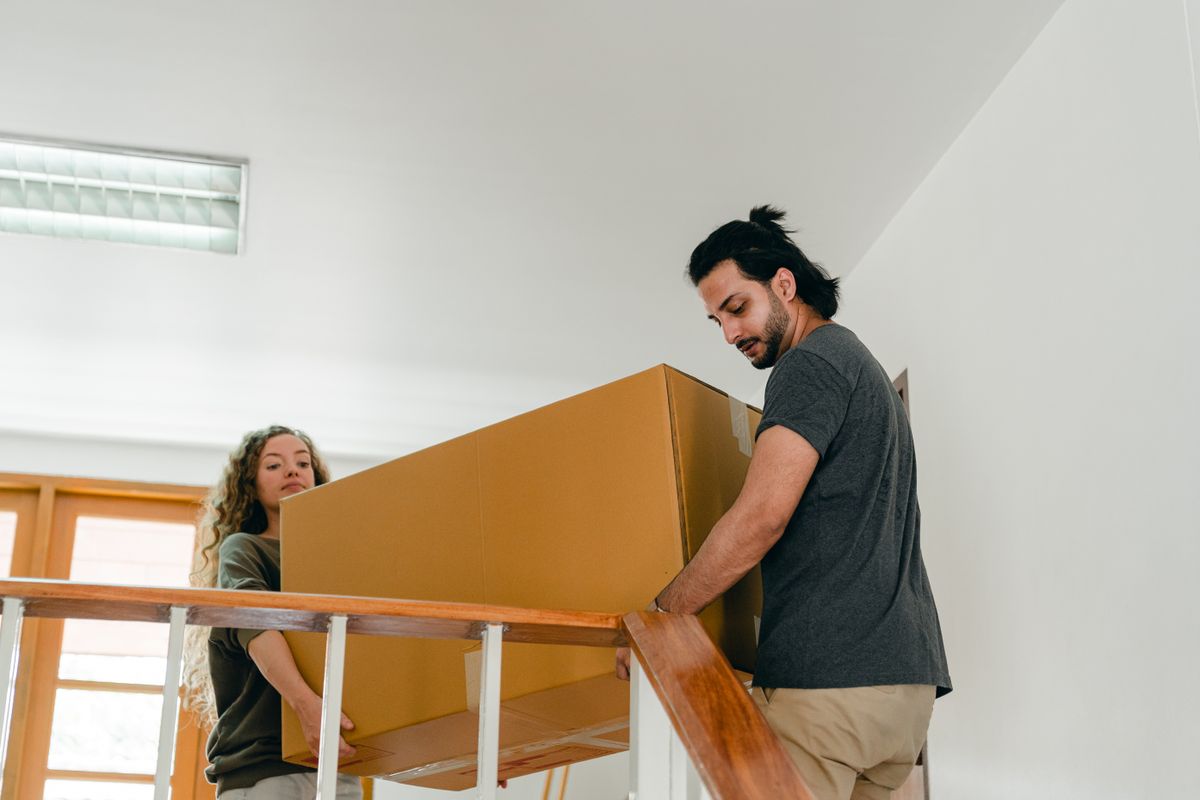
Have a safe in the house? Tell us its weight, its location, and the number of stairs when you request your free quote.
What gun safe movers use
- A heavy-duty dolly rated for the load, with straps that hold the safe to the frame. A standard household hand truck is not built for this
- Stair equipment, such as a stair-climbing dolly, when steps cannot be avoided
- Ramps or a liftgate to get the safe into the truck without lifting it
- Floor protection and thick pads for your home and the finish of the safe
- Tie-down straps to anchor it low against the truck wall
- Enough trained people, with one person directing
Experienced gun safe movers also know when to say no: when a staircase, a deck, or a floor is not up to the load and another route is needed.
Can you move a gun safe yourself
A small handgun safe or a light security cabinet is a two-person job with a hand truck. A full-size gun safe is different, and we do not recommend moving one yourself.
If you are weighing it anyway, be realistic about these points:
- Rented dollies and truck ramps have weight ratings. Check them against the weight of the safe
- Stairs should be off the table without stair equipment and a trained crew
- No one should ever be positioned below a safe on stairs or a ramp
- If it starts to go, the only safe move is to get clear
- Damage to floors, stairs, and door frames adds up quickly
The price of hiring help is small next to an injury or a safe through a staircase.
Setting the safe up in the new home
- Choose the exact spot before the crew arrives so the safe is placed once. Pick a dry location, away from damp walls
- Check that it sits level and does not rock
- Open the door and test the lock several times with the door open before you close it
- Anchor the safe to the floor following the manufacturer's instructions. Anchoring keeps a tall safe from tipping when the heavy door swings open
- Put the shelves, dehumidifier, and lighting back
- Return the contents last
What to tell your mover about the safe
A safe should be part of the plan from the first phone call, not a discovery at the door. When you request a quote for a local or long-distance move, give us:
- The weight and dimensions of the safe
- Where it sits now and where it is going, including the floor level
- The number of steps at each home
- Any tight doorways, turns, or soft ground outside
Those details determine the crew size, the equipment, and the price. Ask how the safe will be covered as well. Our post on moving insurance and valuation explains the options.
Key takeaways
- Empty the safe completely. Firearms, ammunition, and valuables never ride inside
- Movers will not transport ammunition, and firearm transport rules vary by state
- Unbolt the safe, lock the door, and keep the keys or combination with you
- Measure the route and protect floors, and have upper floors checked for the load
- Leave full-size safes and any stairs to an experienced crew with rated equipment