Quick answer
Moving to Texas means no state income tax on wages, long hot summers, and a state so large that Houston, Dallas, Austin, and San Antonio each have their own weather and housing market. Fall through spring is the easiest time to move. Budget for property taxes, and switch your license and registration promptly.
In this guide
- Texas weather and the best time to move to Texas
- Where people moving to Texas settle
- Texas cost of living and tax basics
- Texas driver license and registration for new residents
- What moving day in Texas is really like
- How a long-distance move to Texas works
- First-month checklist after moving to Texas
- Frequently asked questions
Texas weather and the best time to move to Texas
Texas is the second most populous state, with more than 30 million residents according to U.S. Census Bureau estimates, and it covers a huge area. That size is the first thing to understand about the weather: there is no single Texas climate.
According to NOAA's state climate summary, normal yearly precipitation ranges from less than 10 inches in the far west to more than 60 inches in the extreme southeast. January lows average about 20 degrees in the northern Panhandle and about 50 near the mouth of the Rio Grande. Summers are hot across the state. The Gulf Coast adds heavy humidity and the risk of hurricanes, and Texas averaged 149 tornadoes a year from 1991 to 2020.
For a move, that works out to:
- October through April. The best time to move to Texas for most people. Mild days and open calendars
- Spring. Pleasant, but it is storm season in North Texas. Hail and heavy rain can delay a load day
- Summer. The busiest and hottest season. Crews start at first light, and a long carry in the afternoon sun is slow, hard work
- Late summer and fall on the coast. Atlantic hurricane season runs June 1 to November 30. Houston, Galveston, and Corpus Christi moves need flexible dates
Where people moving to Texas settle
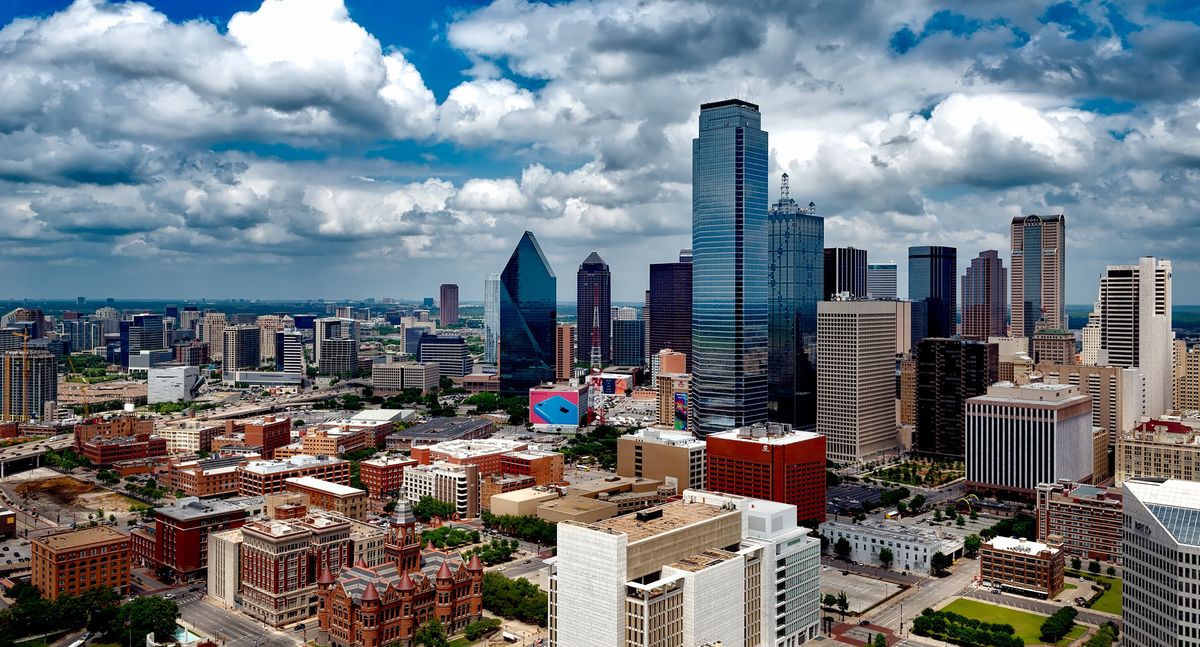
Texas has four big metro areas, and they are hours apart by car.
- Dallas-Fort Worth. A sprawling region in North Texas with two downtowns, dozens of suburbs, corporate headquarters, and a web of toll roads
- Houston. A huge, spread-out city near the Gulf, with a major port. It is humid, and flooding risk varies by neighborhood
- Austin. The state capital in Central Texas, with hill country to the west
- San Antonio. A historic city, more affordable than Austin in many neighborhoods
- El Paso and West Texas. High desert, dry air, and a long way from everything else
We compare the three most common choices in Dallas, Houston, or Austin. Coming from the West Coast? See California to Texas.

Texas cost of living and tax basics
Texas does not tax individual income. The state pays its bills in other ways, and newcomers should understand them before comparing paychecks.
- Sales tax. The state rate is 6.25 percent. Cities, counties, and transit districts can add up to 2 percent, for a top combined rate of 8.25 percent
- Texas property taxes. The Texas Comptroller notes there is no state property tax. Counties, cities, school districts, and special districts set their own rates, and the combined bill is a significant cost of owning a home here. Look up the actual tax history of any house you are considering
- Homestead exemption. The county appraisal district sets taxable values. Ask it how the exemption applies once the home is your primary residence
- Housing. Texas cost of living varies widely by metro and by neighborhood. Central Austin and close-in Dallas cost far more than smaller cities
- Utilities. Air conditioning runs for much of the year. Ask for a year of electric bills
This is general information, not tax advice. Confirm current rates with the Texas Comptroller and talk with a CPA about your situation.
Moving to Texas from another state? Get a free flat-rate quote from a family-owned mover that has been doing this since 1999.
Texas driver license and registration for new residents
According to the Texas Department of Motor Vehicles, new residents have 30 days from the time they move to register a vehicle, and 90 days to get a Texas driver license from the Department of Public Safety. The vehicle steps come first.
- Insure the vehicle in Texas. You will need proof of liability coverage that meets state minimums
- Complete any required inspection. Some counties, including Dallas, Harris, Tarrant, and Travis, also require an emissions test before registration
- Register and title the vehicle at your county tax assessor-collector's office
- Apply for your license at a Texas Department of Public Safety (DPS) driver license office. Check the DPS list of required documents, such as proof of identity and Texas residency, before you go. Reserve an appointment early
For any Texas driver license new resident question, the DPS and Texas Department of Motor Vehicles websites are the final word. Check them before you make the trip.
What moving day in Texas is really like
- Heat. From June through September, plan the heavy work for the morning. Do not leave candles, electronics, vinyl, or medications in a parked truck or a closed garage
- Distance. Crossing Texas takes a full day of driving or more. A move from the East Coast to El Paso is a very different trip than a move to Houston, and delivery windows reflect that
- Storms. Spring thunderstorms in North Texas can bring hail. On the coast, a tropical system can close roads for days
- High-rises. Downtown Dallas, Houston, and Austin buildings usually require a reserved freight elevator, a dock time, and a certificate of insurance from your mover
- HOAs and master-planned communities. Very common in Texas suburbs. Check rules on truck parking, move hours, and containers in the driveway
- Traffic and tolls. Big-city freeways are congested at rush hour. A mid-morning arrival is easier on everyone
Our guide to moving in summer heat covers how to protect your belongings and yourself.
How a long-distance move to Texas works
Our long-distance moving service is quoted as a flat rate based on distance, your inventory, and any added services. Allpoints is family-owned, based in Metro Atlanta, and works as a contract carrier for one of the biggest van line moving companies in the country. That is what makes it possible and affordable to move clients to Texas from all over the United States.
- Inventory and quote. We go through what you are moving and give you a free, no-obligation flat rate
- Booking. Reserve 3 to 4 weeks ahead, and earlier for summer or end-of-month dates
- Packing. Pack yourself or add our packing service, with boxes, paper, bubble wrap, and tape included in the quote
- Loading. Furniture is padded, disassembled where needed, and inventoried
- Delivery. You receive a delivery window, not a single hour. Carry documents, medications, and a few days of essentials with you
When you compare long-distance movers to Texas, ask whether the price is a flat rate, what it includes, and how delivery timing works for your city.
First-month checklist after moving to Texas
- Insure, inspect if required, and register your vehicles
- Transfer your driver license at a DPS office
- Choose an electricity plan if your area lets you pick a provider
- Ask the appraisal district about a homestead exemption if you bought a home
- Register to vote and file your change of address
- Service the air conditioning before the first heat wave
Our moving checklist covers the weeks before the move. When you have a date in mind, request a free quote or call (678) 886-0944.
Key takeaways
- Fall, winter, and early spring are the most comfortable seasons for a Texas move. Summer heat is serious
- Texas has no state income tax on wages, but property taxes and sales tax carry more of the load
- Dallas-Fort Worth, Houston, Austin, and San Antonio differ in weather, traffic, and housing
- Spring storms, Gulf hurricanes, and long driving distances all affect scheduling
- Register vehicles within 30 days and get a Texas license within 90 days, and confirm the current rules before you arrive