
Quick answer
Choose Dallas for the biggest metro and a broad corporate job market, Houston for energy, medicine, and a big, spread-out city near the Gulf, and Austin for a smaller, hillier capital city built around technology and the university. All three share no state income tax, long hot summers, and car-first commutes.
In this guide
- Dallas vs. Houston vs. Austin at a glance
- Moving to Dallas: the biggest metro and a broad job market
- Moving to Houston: energy, medicine, and room to spread out
- Moving to Austin: the capital, the university, and the hills
- Texas weather, taxes, and paperwork compared
- What moving day is like in Dallas, Houston, and Austin
- Which is the best city in Texas to live in, and how the move works
- Frequently asked questions
Dallas vs. Houston vs. Austin at a glance
Most people moving to Texas end up choosing among three places. Interstate 45 links Dallas and Houston, and Austin sits to the west on Interstate 35, a few hours' drive from each. Together with San Antonio they form what planners call the Texas Triangle, home to about three quarters of the state's population.
| What to compare | Dallas | Houston | Austin |
|---|---|---|---|
| City population, 2020 census | 1,304,379 | 2,304,580 | 961,855 |
| Metro area | Dallas-Fort Worth, the largest in Texas at more than 7.6 million | Greater Houston, more than 7 million | About 2.5 million |
| Known for | Corporate headquarters, a broad business mix, and DFW Airport | Energy, the Texas Medical Center, the port, and NASA | State government, the University of Texas, and technology |
| Terrain | Mostly level | Flat coastal plain, about 50 feet above sea level downtown | Rolling hills on the west side, level ground to the east |
| Average July high | 96°F | About 94°F | Often 95°F or higher |
| Average January low | 37°F | 44°F | 42°F |
| Average yearly rainfall | About 39 inches | About 50 inches | About 35 inches |
| Weather to plan for | Heat, severe storms, and tornadoes | Humidity, tropical storms, and flooding | Long runs of 100-degree days and flash floods |
| Rail transit | DART rail and bus | METRO bus and light rail | CapMetro bus and one 32-mile rail line |
Populations are from the 2020 census and weather figures are NOAA climate normals. Houston is the largest city in Texas and the fourth-largest in the country, but Dallas-Fort Worth is the larger metro area.
Moving to Dallas: the biggest metro and a broad job market
Dallas is one half of the Dallas-Fort Worth metroplex, the fourth-largest metro area in the United States. It covers more than 9,000 square miles, so moving to Dallas can mean a downtown high-rise or a subdivision an hour away. The economy is broad, with many corporate headquarters and one of the busiest airports in the world at DFW.
Inside the city you can choose between dense, walkable districts near downtown and established residential neighborhoods. Many newcomers land in the suburbs instead, which spread in every direction and west toward Fort Worth.
Interstates 35 and 45 and a web of other highways carry most of the traffic, and DART runs rail and bus service in Dallas and a group of member suburbs. Dallas sits at the southern end of Tornado Alley, so severe storms are part of life.
Moving to Houston: energy, medicine, and room to spread out
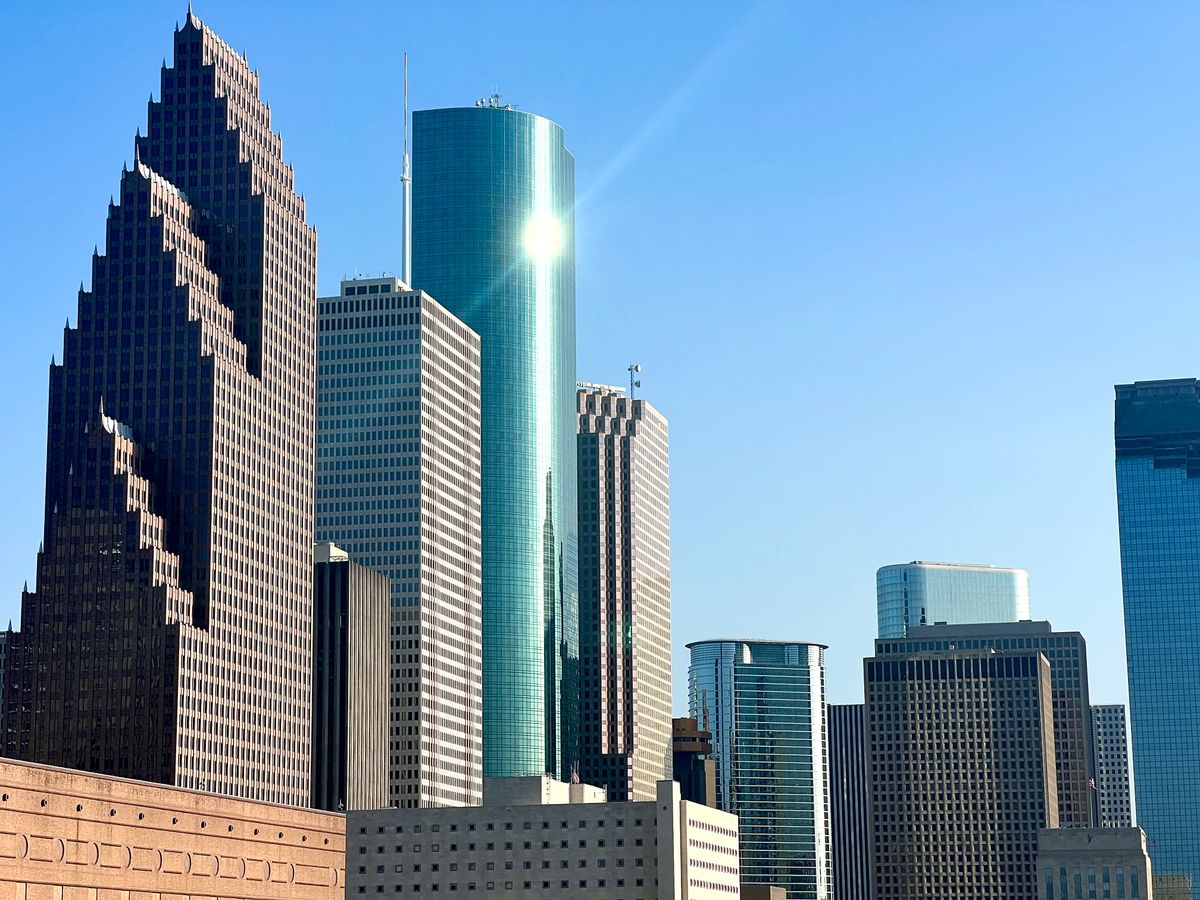
Houston is the largest city in Texas, covering about 640 square miles on flat ground near the Gulf. It is known worldwide for the energy industry, and it is also home to the Texas Medical Center, the busy Port of Houston, and NASA's Johnson Space Center.
Locals describe addresses by the loops. "Inside the Loop" means inside Interstate 610, where you find Downtown and many of the city's older neighborhoods. Beltway 8 circles the city about 10 miles from Downtown, and beyond it are large suburban areas such as Spring and Pearland.
Two things set Houston apart for anyone moving to Houston. First, it is the largest city in the country without formal zoning. Deed restrictions and neighborhood covenants do much of that work instead, so read them before you buy. Second, water. The flat terrain floods, and tropical storms such as Hurricane Harvey in 2017 have caused severe damage. Ask about the flood history of any home, and talk with an insurance agent about flood coverage before you commit.
Picked your Texas city? Get a free, no-obligation flat-rate quote for the move to Dallas, Houston, or Austin.
Moving to Austin: the capital, the university, and the hills
Austin is the state capital and the smallest of the three, with a metro area of about 2.5 million. State government, the University of Texas, and a technology sector nicknamed "Silicon Hills" drive the economy.
The city sits on the Colorado River at the foot of the Balcones Escarpment. That gives Austin something Dallas and Houston do not have: hills. The west side and its suburbs roll, with elevations from about 425 feet to about 1,000 feet, while the east side is flatter. Lady Bird Lake runs through the center beside Zilker Park.
Interstate 35 runs along the east side of central Austin and the MoPac Expressway runs along the west, and most commutes use one or the other. Many people moving to Austin settle in suburbs along those routes, such as Round Rock, Pflugerville, Cedar Park, and Leander.
Texas weather, taxes, and paperwork compared
Heat. All three have long, hot summers. Dallas averages highs of 96°F in July. Austin averages about 123 days a year at 90°F or higher, and about 29 of them reach 100°F. Houston's thermometer reads a little lower, but summer mornings there average over 90 percent relative humidity.
Storms. Dallas gets severe storms and tornadoes, Houston gets tropical weather and flooding, and parts of Austin see frequent flash floods. The Atlantic hurricane season runs from June 1 to November 30, which matters most for a Houston move. See our guide to moving during hurricane season.
Taxes. The tax picture is the same in all three, because it is set by the state. Texas has no personal income tax. The state sales tax is 6.25 percent, and cities and other local districts add to it. Property taxes are set locally and are a large part of the cost of owning a home, so compare the tax bill, not only the price, when you look at houses. Confirm current figures with the county appraisal district, and talk with a CPA about your own situation.
License and registration. Texas sets deadlines for new residents to get a Texas driver's license and to register their vehicles. Our moving to Texas guide covers the steps, and the Texas Department of Public Safety and your county tax office have the current rules.
What moving day is like in Dallas, Houston, and Austin
- Dallas. Uptown and downtown high-rises usually require a reserved freight elevator, a dock time, and a certificate of insurance from your mover. In the master-planned suburbs, HOA rules on truck parking and move hours are common.
- Houston. Humidity is hard on crews and on anything stored in a garage. Summer downpours arrive fast, so we protect floors and keep a covered path to the truck. Deed-restricted neighborhoods may limit where a truck or container can sit
- Austin. West-side hills mean steep driveways and winding streets. If a tractor-trailer cannot reach the house, a smaller shuttle truck may be needed, and that belongs in your quote from the start. Downtown condo towers have the same elevator rules as Dallas
- All three. In summer, crews start at first light. Do not leave candles, electronics, vinyl records, or medications in a hot truck or garage. Our summer heat guide has the full list
Which is the best city in Texas to live in, and how the move works
There is no single best city in Texas to live in. It depends on your work and how you want to live:
- Dallas fits people who want the largest metro, a broad corporate job market, and a major airline hub
- Houston fits people in energy, health care, or shipping who want a big, spread-out city near the Gulf
- Austin fits people in technology, government, or higher education who want a smaller city with hills and a river through the middle
The move itself works the same way for all three. Our long-distance moving service is quoted as a flat rate based on distance, your inventory, and any added services such as packing. Allpoints is family-owned, based in Metro Atlanta, and works as a contract carrier for one of the biggest van line moving companies in the country, which is how we serve as long-distance movers to Texas from anywhere in the United States. Book 3 to 4 weeks ahead, and earlier for summer or the end of the month. Coming from the West Coast? Read moving from California to Texas, then request a free quote.
Key takeaways
- Dallas-Fort Worth is the largest metro in Texas, Houston is the largest city, and Austin is the smallest and hilliest of the three
- Texas has no personal income tax, but property taxes and local sales taxes vary by address
- Houston has no formal zoning and a real flood risk, so check deed restrictions and flood history
- All three have long, hot summers, and each has its own storm season to plan around
- High-rise rules, HOAs, hills, and heat shape moving day in every Texas city