Quick answer
Choose Charleston for the coast, historic neighborhoods, and a port and tourism economy, and accept heat, flooding, and hurricane planning. Choose Greenville for the foothills, four mild seasons, a manufacturing-based job market, and easy access to Atlanta and Charlotte. State taxes and DMV rules are the same in both.
In this guide
- Charleston vs. Greenville at a glance
- Moving to Charleston SC: the Lowcountry coast
- Moving to Greenville SC: the Upstate foothills
- Weather and storms: Lowcountry vs. Upstate
- Taxes and paperwork are the same in both cities
- What moving day is like in Charleston and Greenville
- Charleston or Greenville: how to decide, and how the move works
- Frequently asked questions
Charleston vs. Greenville at a glance
South Carolina's two best-known destinations for newcomers sit at opposite corners of the state. Charleston is on the Atlantic in the Lowcountry. Greenville is in the Upstate, where the Blue Ridge foothills begin, with Interstates 385 and 26 connecting the two. The Lowcountry vs. Upstate choice is really a choice between two climates and two ways of living.
| What to compare | Charleston | Greenville |
|---|---|---|
| Region | The Lowcountry, on the Atlantic coast | The Upstate, in the foothills of the Blue Ridge Mountains |
| City population, 2020 census | 150,227 | 70,720 |
| Metro area | About 850,000 | Close to 1 million |
| Elevation | Close to sea level | About 980 feet |
| Economy | Tourism, the port and logistics, aerospace, and technology | Advanced manufacturing and automotive, with BMW and Michelin nearby |
| Average July high | 91°F | 90°F |
| Average January low | 39°F | 32°F |
| Snow | Almost never | About 4 inches in an average year |
| Storm exposure | Direct coastal hurricane risk and tidal flooding | Inland, though tropical systems can still bring heavy rain and wind |
Populations are from the 2020 census and weather figures are NOAA climate normals. One surprise in the numbers: the city of Greenville is small, but its metro area is larger than Charleston's.
Moving to Charleston SC: the Lowcountry coast
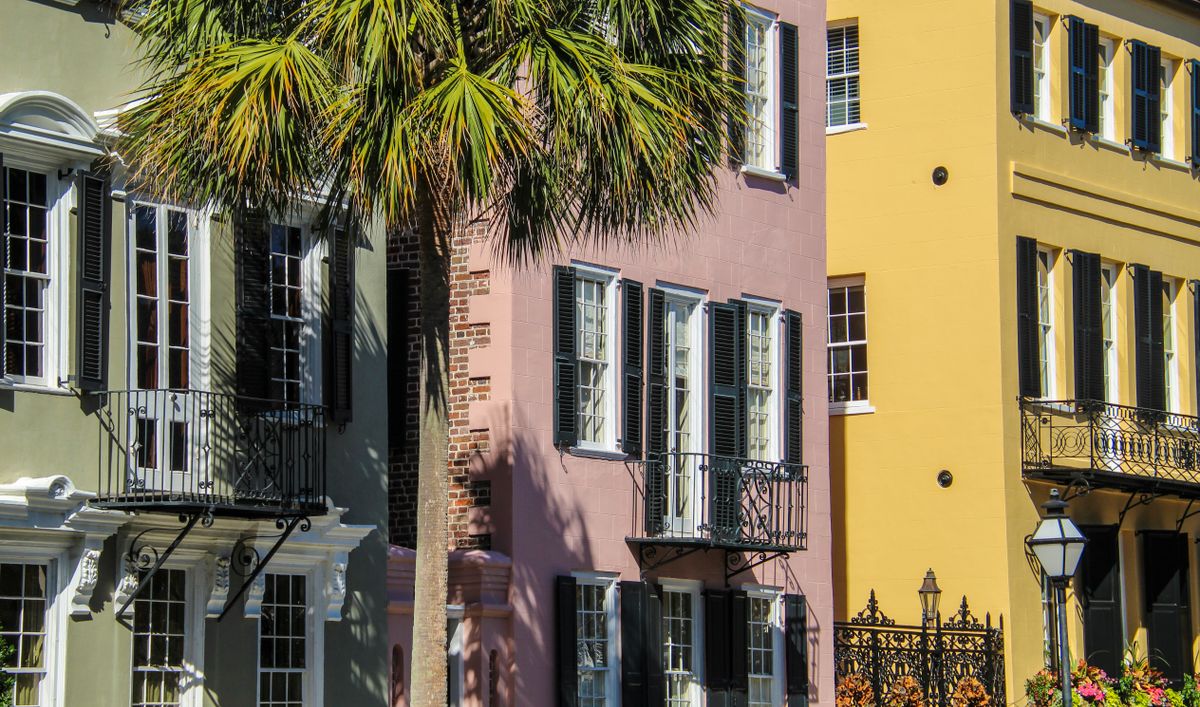
Charleston is the largest city in South Carolina. Its historic downtown, called the Peninsula, sits between the Ashley and Cooper rivers where they meet Charleston Harbor. This is the Charleston of postcards: the Battery, Rainbow Row, church steeples, and blocks of well-preserved old houses.
Most people moving to Charleston SC live beyond the Peninsula. West Ashley lies across the Ashley River, James Island sits between downtown and Folly Beach, and Johns Island and Daniel Island are farther out. Mount Pleasant is a separate city across the Cooper River, and North Charleston and Summerville extend the metro inland. Water separates most of these areas, so bridges are part of nearly every commute.
The economy rests on tourism, one of the busiest ports in the country, aerospace, and information technology. The trade-off for the setting is the water itself. The land is low, heavy rain and high tides can flood streets, and the coast is exposed to hurricanes. Hurricane Hugo came ashore at Charleston Harbor in 1989 and damaged about three quarters of the homes in the historic district.

Moving to Greenville SC: the Upstate foothills
Greenville sits at about 980 feet in the foothills of the Blue Ridge Mountains. The Reedy River runs through the middle of downtown, where Falls Park and its pedestrian suspension bridge anchor downtown. The Swamp Rabbit Trail, a 22-mile greenway, runs from downtown to the town of Travelers Rest, and Paris Mountain is about 8 miles north.
Once known as the textile center of the South, Greenville now runs on advanced manufacturing. BMW builds vehicles between Greenville and Spartanburg, and Michelin moved its headquarters for North America to Greenville in 1984. Suburbs such as Simpsonville, Mauldin, Fountain Inn, and Greer hold much of the newer housing.
Location is a selling point for anyone moving to Greenville SC. The city is on Interstate 85, about 145 miles from Atlanta and 100 miles from Charlotte, so two major airports and job markets are within a few hours. For us, based in Metro Atlanta, Greenville is a straight run up I-85.
Moving to Charleston or Greenville? Get a free, no-obligation flat-rate quote from a family-owned mover based next door in Georgia.
Weather and storms: Lowcountry vs. Upstate
Summer afternoons are about the same in both cities, with average July highs near 90°F and plenty of humidity. The differences are in winter and in storm season.
- Winter. Charleston is mild, with average January lows near 39°F, and measurable snow arrives about once a decade. Greenville has a real winter, with January lows near freezing and about 4 inches of snow in an average year
- Hurricanes. The Atlantic hurricane season runs from June 1 to November 30, and the National Hurricane Center notes that most activity comes from mid-August to mid-October. In Charleston, that means knowing your evacuation zone and carrying flood coverage where it is needed. Greenville is far from storm surge, but tropical systems moving inland can still bring heavy rain and wind
- Best time to move. Spring and fall are comfortable in both. For a move to the coast in late summer, build a few flexible days into the schedule. Our guide to moving during hurricane season explains how
Taxes and paperwork are the same in both cities
Living in South Carolina means the same state rules wherever you settle. The state has a graduated income tax with a top rate of about 6 percent. The state sales tax is 6 percent, and local taxes can add up to 3 percent more in some places. Property tax bills are set locally, by counties, cities, and school districts.
Rates and rules change. Confirm current figures with the South Carolina Department of Revenue and your county, and talk with a CPA about your own situation. For driver's license and vehicle registration steps, see our moving to South Carolina guide.
One cost does differ by city: insurance. Near the coast, wind and flood coverage can be separate policies. Get quotes for the exact address before you commit to a home in the Charleston area.
What moving day is like in Charleston and Greenville
- Historic Charleston. Streets on the Peninsula are narrow, parking is tight, and many old houses have steep, narrow staircases. A tractor-trailer usually cannot reach the door, so we plan for a smaller shuttle truck and include it in the quote
- Charleston bridges and tides. Moves to the islands and Mount Pleasant cross at least one bridge, so timing around traffic matters. Ask whether the street floods at high tide or in heavy rain, and tell your mover
- Greenville hills. Foothill lots can mean sloped or long driveways. Send photos of the approach so the right truck arrives
- Newer subdivisions in both metros. HOAs often set move hours and limit where trucks and containers can park. Read the covenants before you pick a date
- Heat and storms. From late May through September, crews start early. Afternoon thunderstorms are common, so we protect floors and keep a covered path to the truck. See our summer heat guide
Charleston or Greenville: how to decide, and how the move works
If the ocean, history, and a coastal lifestyle are the reason you are coming, Charleston is the answer, and the flooding and storm planning are the price. If you want hills, cooler winters, lower storm risk, and quick access to Atlanta and Charlotte, Greenville fits better. Visit both in July if you can.
Allpoints is a family-owned mover based in Metro Atlanta, one state over. We work as a contract carrier for one of the biggest van line moving companies in the country, which lets us serve as long-distance movers to South Carolina from anywhere in the United States. Our long-distance moving service is quoted as a flat rate based on distance, your inventory, and added services such as packing. Book 3 to 4 weeks ahead, and earlier in summer. Coming from up north? Read leaving the Northeast for the Carolinas, then request a free quote.
Key takeaways
- Charleston is the low-lying historic port on the coast, and Greenville is the foothills city on I-85
- Greenville has colder winters and some snow, while Charleston has the direct hurricane and flooding risk
- State income tax, sales tax, and DMV rules are the same in both, but coastal insurance costs more homework
- Historic Charleston streets often require a shuttle truck, and Greenville lots can have steep driveways
- Greenville is about 145 miles from Atlanta and 100 miles from Charlotte