Quick answer
Los Angeles is far bigger, with a wider job market, more neighborhoods to choose from, and longer drives between them. San Diego is smaller and calmer, shaped by the Navy, research, and the beach. Both have mild, dry weather and the same California taxes, so the choice comes down to work and pace.
In this guide
- Los Angeles vs. San Diego at a glance
- Moving to Los Angeles: a region more than a city
- Moving to San Diego: Navy town, research hub, beach city
- Southern California weather: nearly the same, with local twists
- Taxes and paperwork are the same in both cities
- What moving day is like in Los Angeles and San Diego
- Los Angeles or San Diego: how to decide, and how the move works
- Frequently asked questions
Los Angeles vs. San Diego at a glance
The two largest cities in California sit on the same stretch of Southern California coast, close enough to drive between but different enough to feel like separate worlds. People planning a move to Southern California often start with the same question: Los Angeles or San Diego? The weather will not decide it for you, because it is excellent in both. Size, work, and daily pace will.
| What to compare | Los Angeles | San Diego |
|---|---|---|
| City population, 2020 census | 3,898,747, the second-largest city in the country | 1,386,932, the eighth-largest |
| Metro area | About 12.9 million | About 3.3 million |
| Layout | A coastal basin and inland valleys divided by mountain ranges, about 469 square miles | Mesas separated by deep canyons, on a bay beside the Mexican border |
| Economy | International trade, entertainment, aerospace, technology, fashion, and tourism | Defense and the Navy, manufacturing, tourism, research, and biotech |
| Average August high | About 84°F downtown, cooler at the coast | Highs in the 70s for much of the warm season |
| Average January low | About 49°F | Around 50°F |
| Average yearly rainfall | About 14 inches | About 10 inches |
| State income tax | California rates | The same California rates |
Populations are from the 2020 census, and weather figures are long-term climate averages.
Moving to Los Angeles: a region more than a city
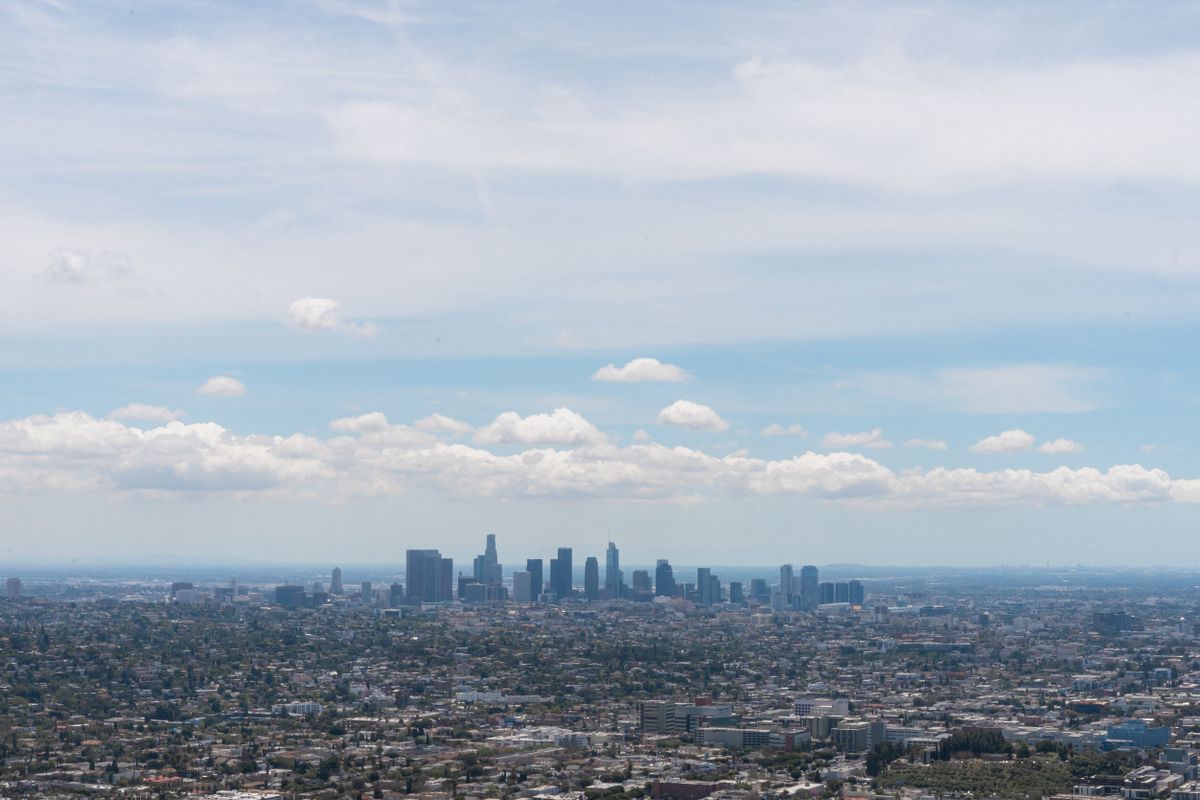
Los Angeles is the second most populous city in the United States, and its metro area holds about 12.9 million people. The city alone covers about 469 square miles. It fills a coastal basin, climbs through the Santa Monica Mountains, and spreads north across the San Fernando Valley.
That is why people who live here talk about neighborhoods, not the city. Districts from Downtown to the hillsides north of it and across the San Fernando Valley are all part of the city of Los Angeles, and they feel like separate towns. Outside downtown, most of the city is low-rise. Hillside districts such as Mt. Washington and the Baldwin Hills add steep, winding streets.
The economy is as spread out as the map: international trade through the Los Angeles and Long Beach port complex, the busiest in the country by some measures, film and television, aerospace, technology, fashion, and tourism. For anyone moving to Los Angeles, the practical rule is to choose the job first and the neighborhood second, because a cross-town commute can take a real piece of your day.
Moving to San Diego: Navy town, research hub, beach city
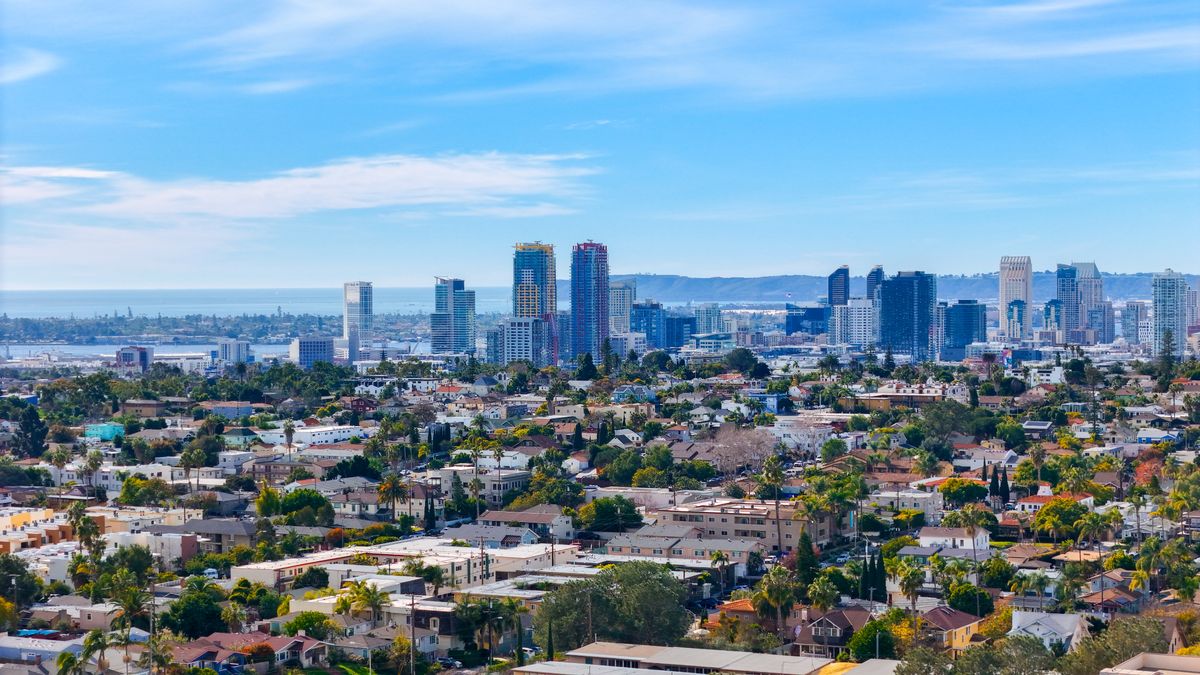
San Diego is the second-largest city in California and the eighth-largest in the country, with a metro area of about 3.3 million. It sits on San Diego Bay next to the Mexican border, and its land is a series of mesas separated by deep canyons. Those canyons give neighborhoods clear edges and green space, and they mean that two streets close together on a map may not connect.
Well-known neighborhoods include Downtown and the Gaslamp Quarter, Little Italy, Hillcrest, North Park, and Point Loma, along with the beach communities of La Jolla, Pacific Beach, Mission Beach, and Ocean Beach.
Defense, manufacturing, and tourism are the largest parts of the economy, and the Navy has a major presence. Research and a large biotech cluster add to the mix, and Qualcomm was founded and is headquartered here. If you are a military household moving to San Diego, read our guide to a military PCS move.
Moving to Los Angeles or San Diego from another state? Get a free, no-obligation flat-rate quote from Allpoints.
Southern California weather: nearly the same, with local twists
Both cities are mild and dry. Average winter lows are around 50°F, and rain is scarce: about 14 inches a year in downtown Los Angeles and about 10 in San Diego. What surprises newcomers is how much the weather changes over a short drive.
- Coast versus inland. In July, the average high is about 69°F at the Santa Monica Pier and about 95°F in Canoga Park, in the San Fernando Valley. San Diego has the same pattern, with sunnier, warmer weather a few miles inland
- Gray mornings. In late spring and early summer a marine layer keeps the coast cool and overcast, a pattern called June Gloom. San Diegans also call the early part of it May Gray
- Wind and fire. From fall into spring, dry Santa Ana winds can raise wildfire risk across the region
- Earthquakes. Southern California records about 10,000 earthquakes a year, though most are too small to feel. Anchor tall furniture once you move in, and ask your insurance agent about earthquake coverage
Taxes and paperwork are the same in both cities
State taxes do not change between Los Angeles and San Diego. California has a graduated income tax, with a top rate of 13.3 percent on the highest incomes. Sales tax and property tax bills vary by city and county. Confirm current figures with the California Franchise Tax Board and the county assessor, and talk with a CPA about your situation.
New residents have deadlines for a California driver's license and vehicle registration, set by the California DMV. Our moving to California guide walks through the steps.
One California detail matters before the truck is loaded. The state inspects plants and produce at agricultural inspection stations on the highways coming in, and some items can be refused. See what you cannot take across state lines before you pack houseplants or firewood.
What moving day is like in Los Angeles and San Diego
- Los Angeles distances. Everything takes longer to reach than the map suggests. We plan deliveries around traffic, and you should plan your own arrival the same way
- Los Angeles hills and parking. Hillside streets can be too narrow or steep for a tractor-trailer, which means a smaller shuttle truck and a line for it in your quote. On crowded blocks, ask the city or your building manager how to reserve curb space for moving day
- Apartments and condos in both cities. Expect elevator reservations, set move hours, and a certificate of insurance requirement. Older walk-up buildings have no elevator at all, so tell your mover how many flights
- San Diego canyons and beaches. Canyon-rim streets often end in cul-de-sacs with steep driveways. Beach neighborhoods have tight alleys and very little parking, especially in summer
- Heat inland. A summer move in an inland valley is a hot-weather move even when the coast is cool. Crews start early, and electronics and candles should not sit in the truck
A cross-country shipment to California is on the road for several days, so pack a first-week kit to travel with you. Our cross-country moving timeline lays out the weeks before and after.
Los Angeles or San Diego: how to decide, and how the move works
Choose Los Angeles if your industry is centered there, you want the widest choice of neighborhoods, and you accept long drives as part of living in Southern California. Choose San Diego if you want a smaller city with a calmer pace, or your work is tied to the Navy, research, or biotech.
Getting there works the same way for both. Allpoints is a family-owned mover based in Metro Atlanta, and we work as a contract carrier for one of the biggest van line moving companies in the country. That is what lets us act as long-distance movers to California from anywhere in the United States. Our long-distance moving service is quoted as a flat rate based on distance, your inventory, and added services such as packing. Book 3 to 4 weeks ahead, and earlier in summer. When you have a rough date, request a free quote.
Key takeaways
- Los Angeles is far larger and more spread out, and San Diego is smaller and calmer
- Both are mild and dry, but the coast can be 25 degrees cooler than inland valleys in summer
- California income tax and DMV rules are the same in both cities
- Hills, canyons, tight parking, and building rules shape moving day in both
- California inspects plants and produce at its borders, so check before you pack them