Quick answer
ITP means inside Interstate 285, the loop around Atlanta, and OTP means outside it. Inside, you get older homes, shorter drives, and MARTA rail, with tighter streets and less space. Outside, you get newer houses and bigger lots, with longer commutes. Pick the side where your daily drive ends.
In this guide
- What ITP and OTP mean in Atlanta
- Living inside the Perimeter, Atlanta's close-in neighborhoods
- Living outside the Perimeter, in the Atlanta suburbs
- Commute and traffic: the real deciding factor
- Moving day ITP vs. OTP: what a local mover sees
- New to Georgia: license, registration, and emissions
- Inside or outside the Perimeter: how to decide
- Frequently asked questions
What ITP and OTP mean in Atlanta
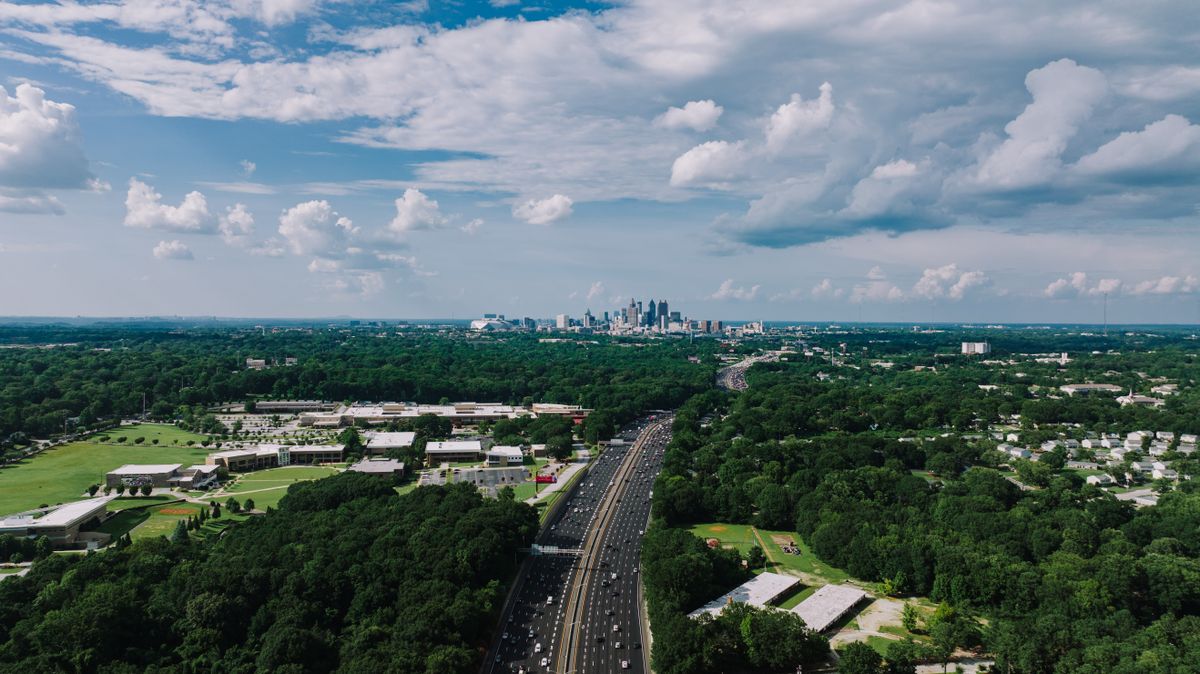
Interstate 285 circles Atlanta in a loop of about 64 miles, running through Fulton, Cobb, DeKalb, and Clayton counties. Everyone here calls it the Perimeter, and locals sort every address into one of two groups: inside the Perimeter, or ITP, and outside the Perimeter, or OTP. The line is so ingrained that when the 770 area code was created in 1995, the split followed it, with 404 mostly inside and 770 outside.
We have been moving families around Metro Atlanta since 1999, and the first thing we ask a newcomer is which side they are considering, because it changes almost everything about the move.
| What to compare | Inside the Perimeter (ITP) | Outside the Perimeter (OTP) |
|---|---|---|
| What it covers | The city of Atlanta and close-in communities such as Decatur | The suburbs and outer counties, including Cobb, Gwinnett, and north Fulton |
| Typical housing | Older single-family homes and bungalows, plus condos and apartments in the high-rise districts | Newer subdivisions, townhome communities, and larger lots |
| Getting around | Shorter drives, MARTA rail and bus, more places you can walk to | Longer drives on the interstates and GA 400, mostly by car |
| Rail transit | Most of MARTA's 38 rail stations | A few MARTA stations on the north side, such as Dunwoody and Sandy Springs |
| Moving-day issues | Tight streets, street parking, stairs, tree limbs, and high-rise rules | HOA rules, gates, long driveways, and more miles between homes |
| Emissions test for registration | Required, since every county I-285 crosses is a testing county | Required in the 13 metro testing counties, including Cobb and Gwinnett, but not farther out |
Living inside the Perimeter, Atlanta's close-in neighborhoods
Inside the Perimeter, Atlanta is a city of distinct neighborhoods. Around the high-rise districts of Downtown, Midtown, and Buckhead are leafy, low-density streets dominated by older single-family homes, including many bungalows. Atlanta neighborhoods such as Inman Park, Old Fourth Ward, East Atlanta, and West Midtown are all ITP, and so is the city of Decatur to the east.
The appeal is proximity. Jobs, restaurants, parks, and the BeltLine, a 22-mile former railroad loop being turned into trails around the central city, are close by. MARTA's four rail lines run mostly inside the Perimeter and reach the airport.
The trade-offs are space and age. Lots are smaller, many houses are several generations old, driveways are short or shared, and parking is often on the street.

Living outside the Perimeter, in the Atlanta suburbs
Outside the Perimeter is where most of the metro area's residents live. It is not one place. It is dozens of cities and unincorporated communities spread across the surrounding counties, across Cobb, Gwinnett, north Fulton, and the other surrounding counties.
The Atlanta suburbs generally offer newer houses, bigger lots, garages, and planned subdivisions, many with a homeowners association. The trade-off is the drive. Most OTP commutes run by car on I-75, I-85, I-20, or Georgia 400, and often onto I-285 itself.
Some communities blur the line. Sandy Springs and Dunwoody, for example, sit along the northern arc of the loop, so you can live a minute from the Perimeter on either side of it.
Moving inside or outside the Perimeter? Get a free, no-obligation quote from a family-owned Metro Atlanta mover.
Commute and traffic: the real deciding factor
More than two million people use I-285 every day. Its northern arc, called the Top End, carries about 250,000 vehicles a day between the I-75 interchange and Spaghetti Junction, the interchange with I-85. If your job is on one side of the metro and your house is on the other, that is the road you will learn best.
Transit helps in some places and not in others. MARTA rail has four lines and 38 stations in Fulton and DeKalb counties. Cobb and Gwinnett have no MARTA rail stations, so most commutes there are by car.
Our advice is simple. Before you choose a house, drive the commute from that address at the hour you would really drive it, in both directions.
Moving day ITP vs. OTP: what a local mover sees
As local movers, Atlanta is our home ground, and the two sides of the Perimeter are different jobs.
- ITP streets. Older neighborhoods have narrow streets with cars parked on both sides and a heavy tree canopy. We check for low limbs and plan where the truck can sit before moving day
- ITP houses. Bungalows often have front steps, tight stairways, and small doorways. Large pieces may need to be taken apart and put back together, which our crews handle
- High-rises. Midtown and Buckhead towers usually require a reserved freight elevator, a loading dock time, and a certificate of insurance from your mover. Reserve the elevator as soon as you have a date
- OTP subdivisions. HOAs may limit move hours, truck parking, and containers in the driveway. Gated communities need the gate code or a guard notified ahead of time
- OTP driveways. Long, steep, or curving driveways are common on hilly lots. Tell us if a large truck cannot get close to the door
- Traffic. A move that crosses the Perimeter should avoid rush hour. Local moves are billed hourly, so time in traffic matters
- Heat. From late May through September, we start early. See our guide to moving in summer heat
New to Georgia: license, registration, and emissions
If you are arriving from another state, the paperwork is the same ITP or OTP, with one difference to check.
- Driver's license. You must apply for a Georgia license within 30 days of becoming a resident, according to the Georgia Department of Driver Services
- Vehicle registration. The Georgia Department of Revenue says vehicles must be registered within 30 days of your move, and you need the Georgia license or ID first
- Emissions. Residents of 13 metro counties, including Fulton, DeKalb, Cobb, Gwinnett, Clayton, Cherokee, and Forsyth, need an emissions inspection before registering. Counties farther out may not require one
Property taxes also change from county to county and city to city, so compare the tax bill on any two houses you are weighing. Our moving to Georgia guide covers the statewide details. Rules change, so confirm them with the state before you go.
Inside or outside the Perimeter: how to decide
Ask yourself three questions:
- Where will you work? Choose the side, and the corridor, where your longest daily trip ends
- How much space do you need? The same budget usually buys more house and yard OTP and more location ITP
- How do you want to spend a Saturday? Walking to a park and a coffee shop, or in a backyard with room to spread out
Some families do both over time, renting ITP first and buying OTP later. Either way, we can help. Allpoints is a family-owned, licensed and insured mover based in Metro Atlanta. Our local moving service is billed hourly based on crew size and truck needs, and 1 to 2 weeks of notice is usually enough outside the summer rush. If you are coming from another state, our long-distance moving service is quoted as a flat rate. Still comparing cities? Read Atlanta vs. Charlotte vs. Nashville. When you are ready, request a free quote or call (678) 886-0944.
Key takeaways
- ITP means inside I-285 and OTP means outside it, and locals use the terms for every address
- ITP offers older homes, shorter trips, and MARTA rail, while OTP offers newer houses and more space
- More than two million people use I-285 daily, so test your commute before you choose
- Tight streets and high-rise rules shape ITP moves, and HOAs, gates, and distance shape OTP moves
- New Georgia residents have 30 days to get a license and register vehicles