
Quick answer
Moving to Florida means no state income tax on wages, year-round warmth, and a hurricane season that runs June 1 to November 30. Most newcomers find late fall through spring the easiest time to move. Plan for condo and HOA move rules, insurance costs, and a quick switch of your license and registration.
In this guide
- Florida weather and the best time to move to Florida
- Where people moving to Florida settle
- Florida cost of living and tax basics
- Florida driver license and registration for new residents
- What moving day in Florida is really like
- How a long-distance move to Florida works
- First-month checklist after moving to Florida
- Frequently asked questions
Florida weather and the best time to move to Florida
Florida is the third most populous state, with more than 22 million residents according to U.S. Census Bureau estimates. Many of them came from somewhere else, and newcomers tend to say the same thing about their first summer: it is hotter and wetter than they expected.
NOAA's state climate summary describes hot, humid summers and mild winters, with frequent afternoon and evening thunderstorms. Florida has the highest annual number of thunderstorms in the United States. Atlantic hurricane season runs from June 1 to November 30, and activity typically peaks around mid-September.
For a move, the calendar looks like this:
- Late fall through spring. The best time to move to Florida. Cooler, drier, and outside hurricane season
- Winter in South Florida. Great weather, but seasonal residents arrive too, so condo elevators and mover calendars fill up
- Summer. Doable with an early start, plenty of water, and flexible dates in case a storm threatens
If your dates fall in storm season, read our guide to moving during hurricane season for the Florida hurricane season moving questions to ask. For the heat itself, see moving in summer heat.
Where people moving to Florida settle
Florida is long. Pensacola and Miami are hundreds of miles apart, and the regions feel like different states.
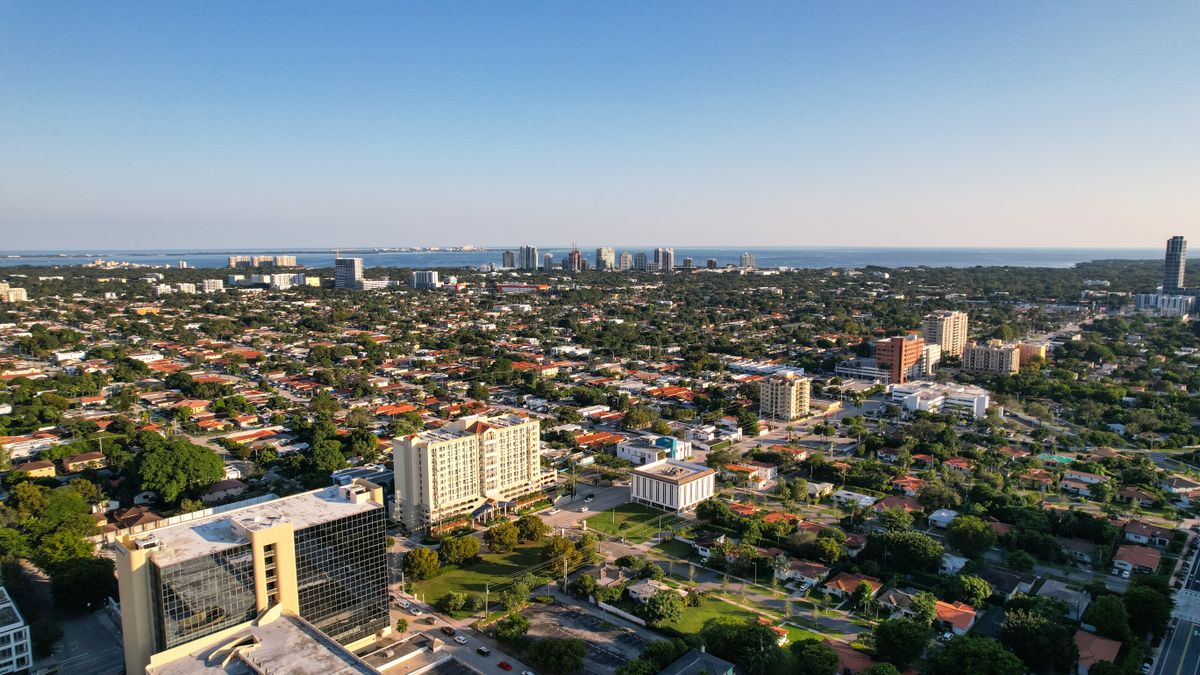
- South Florida. Miami, Fort Lauderdale, and West Palm Beach run together along the coast. Expect high-rises, dense traffic, and high housing costs
- Tampa Bay. Tampa, St. Petersburg, and Clearwater on the Gulf Coast, with a mix of older bungalow neighborhoods and new suburbs
- Central Florida. Orlando and its fast-growing suburbs, far from the beach but close to jobs in tourism and other industries
- Northeast Florida. Jacksonville is a large, spread-out city with more of a Southern feel and cooler winters than South Florida
- Southwest Florida. Cape Coral, Fort Myers, Naples, and Sarasota draw many retirees
- The Panhandle and Tallahassee. Smaller cities, the state capital, and cooler winters than the peninsula
Still deciding? We compare the big four in Miami, Tampa, Orlando, or Jacksonville.
Florida cost of living and tax basics
The headline is true: Florida does not tax individual income. That matters most to people arriving from high-tax states, and it is a big reason routes like New York to Florida stay busy.
The rest of the Florida cost of living picture takes more homework:
- Sales tax. The state rate is 6 percent. Many counties add a local surtax of up to 2 percent, according to the Tax Foundation, so the combined rate depends on the county
- Housing. Prices and rents vary widely between South Florida, the Gulf Coast, Central Florida, and the Panhandle
- Insurance. Homeowners coverage, and wind and flood coverage in particular, can be a major line in the budget. Get real quotes for a specific address before you commit to it
- Property tax. Set locally. Ask the county property appraiser how the homestead exemption works for a primary residence
- Condo and HOA fees. Common across the state, and worth reading line by line
Tax rules change, and this is general information, not tax advice. Confirm current rates with the Florida Department of Revenue and talk with a CPA about your situation.
Planning a long-distance move to Florida? Get a free flat-rate quote from a family-owned mover that has been doing this since 1999.
Florida driver license and registration for new residents
Florida expects new residents to switch over quickly. According to the Florida Department of Highway Safety and Motor Vehicles (FLHSMV), you should get a Florida driver license within 30 days of establishing residency, and get Florida insurance and title and register your vehicles within 10 days.
A sensible order for any Florida driver license new resident checklist:
- Before you leave, gather identity documents, your Social Security card, and two proofs of your new Florida address as soon as you have them
- Set up Florida auto insurance through a Florida-licensed agent for your arrival date
- Visit a driver license office or county tax collector office to transfer your license
- Title and register each vehicle at a motor vehicle service center. Bring the out-of-state title or lienholder information, and get the required VIN verification
Deadlines, fees, and document rules change. Check the FLHSMV website or call your county tax collector before you go, and do it in your first week so nothing lapses.
What moving day in Florida is really like
We are based in Metro Atlanta and load trucks for Florida year-round. These are the things that catch newcomers off guard:
- Heat and humidity. Crews start early. Keep candles, electronics, artwork, and anything that can warp or melt out of a hot truck or garage as much as possible
- Afternoon storms. In summer, plan for a downpour. Floor runners and a covered path to the door keep things moving
- High-rises and condos. Many buildings require a reserved freight elevator, set move hours, a deposit, and a certificate of insurance from your mover. Some do not allow weekend moves
- HOAs and gated communities. Gate lists, truck size limits, and rules about containers in the driveway are common
- Truck access. Barrier islands, narrow beach streets, and parking garages may call for a smaller shuttle truck. Tell your mover what the street looks like
- Storm season. If a named storm threatens, dates can shift. Keep important documents and medications with you
How a long-distance move to Florida works
Our long-distance moving service is quoted as a flat rate based on distance, your inventory, and any added services. Allpoints works as a contract carrier for one of the biggest van line moving companies in the country, which is what makes it possible and affordable to move clients to Florida from all over the United States.
- Inventory and quote. We go through what you are moving and give you a free, no-obligation flat rate
- Booking. Reserve 3 to 4 weeks ahead, and earlier for summer or end-of-month dates
- Packing. Pack yourself or add our packing service, with boxes, paper, bubble wrap, and tape included in the quote
- Building paperwork. Send us your condo or HOA move rules early so the certificate of insurance and elevator booking are ready
- Delivery. You receive a delivery window. Carry what you need for the first days with you
When you compare long-distance movers to Florida, ask each one the same questions: is the price a flat rate, what is included, and who handles the building requirements.
First-month checklist after moving to Florida
- Transfer your driver license and register your vehicles
- Confirm homeowners, flood, or renters coverage is active at the new address
- Ask the county about a homestead exemption if you bought a primary residence
- Register to vote and file your change of address
- Learn your evacuation zone and put together a basic storm kit
- Service the air conditioning. You will rely on it most of the year
Our moving checklist covers the weeks before the move. When you have a date in mind, request a free quote or call (678) 886-0944.
Key takeaways
- Late fall through spring is the most comfortable time for a Florida move. Summer brings heat, daily storms, and hurricane season
- Florida has no state income tax on wages, but insurance and housing costs deserve a close look
- Miami, Tampa Bay, Orlando, and Jacksonville are four very different places to live
- Condos and HOAs often control move days, elevators, and truck parking, so ask before you book
- Get a Florida license within 30 days and register vehicles within 10 days, and confirm current rules with FLHSMV