Quick answer
Choose Seattle if you want a dense, walkable big city and can live with hills, tight streets, and older buildings. Choose Bellevue if you want a newer, quieter city with easier parking and a job on the Eastside. They share the same weather and state tax rules, and a floating bridge separates them.
In this guide
- Seattle vs. Bellevue at a glance
- Moving to Seattle: hills, water, and city neighborhoods
- Moving to Bellevue: the heart of the Eastside
- The bridge question: commuting between Seattle and Bellevue
- Weather, taxes, and paperwork: the same on both sides
- What moving day is like in Seattle and in Bellevue
- Seattle or Bellevue: how to decide, and how the move works
- Frequently asked questions
Seattle vs. Bellevue at a glance
On a map, Seattle and Bellevue are neighbors. In daily life, Lake Washington sits between them, and which side you live on shapes your commute, your housing, and your weekends. People relocating for work usually ask the same thing: Seattle or Bellevue?
| What to compare | Seattle | Bellevue |
|---|---|---|
| Where it sits | West side of Lake Washington, on an isthmus between the lake and Puget Sound | East side of Lake Washington, on what locals call the Eastside |
| City population, 2020 census | 737,015 | 151,854 |
| Feel | A dense, older big city built across steep hills | A smaller, newer city with its own downtown towers and suburban neighborhoods |
| Big employers close by | Amazon, Starbucks, Boeing, and many more | Corporate offices downtown and major tech employers across the Eastside |
| Crossing the lake | State Route 520 or Interstate 90, both on floating bridges | The same two bridges, in the other direction |
| Weather | Mild, gray, wet winters and dry summers | The same |
| State tax on wages | None in Washington | None in Washington |
Populations are from the 2020 census. Seattle is about five times the size of Bellevue, but the two anchor one metro area of roughly 4 million people.
Moving to Seattle: hills, water, and city neighborhoods
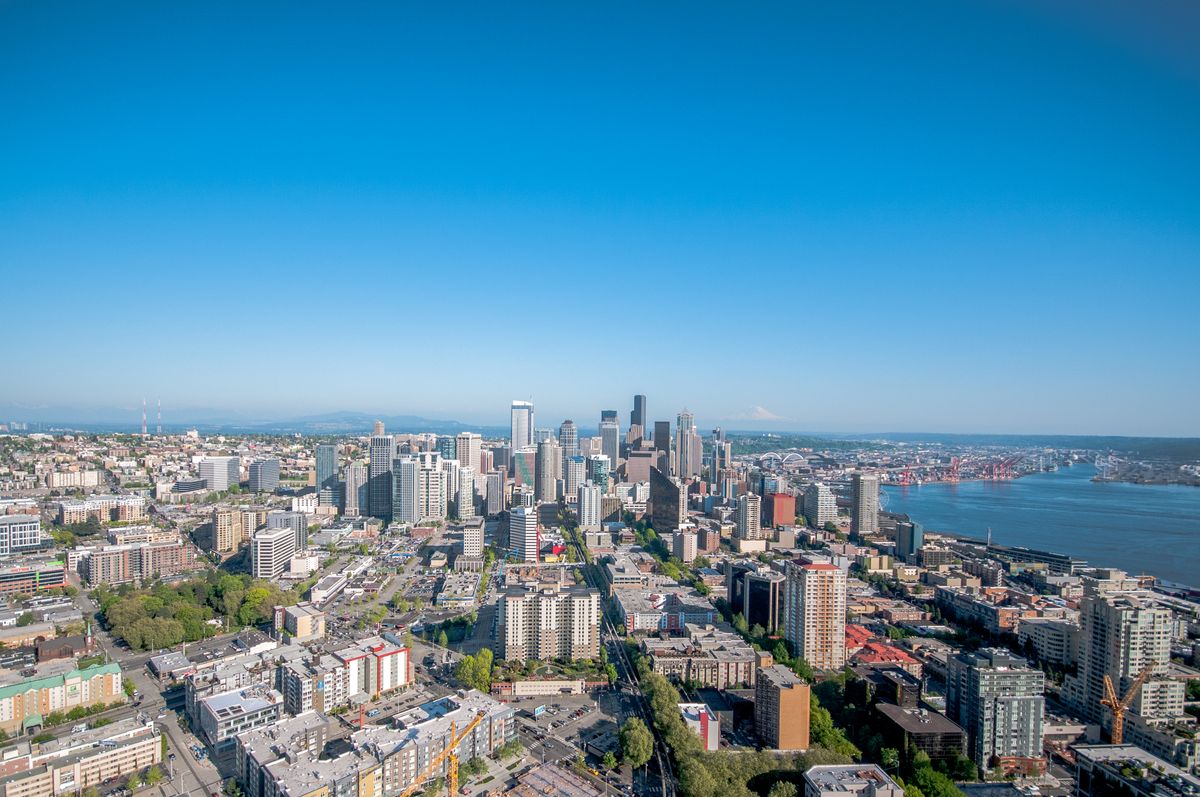
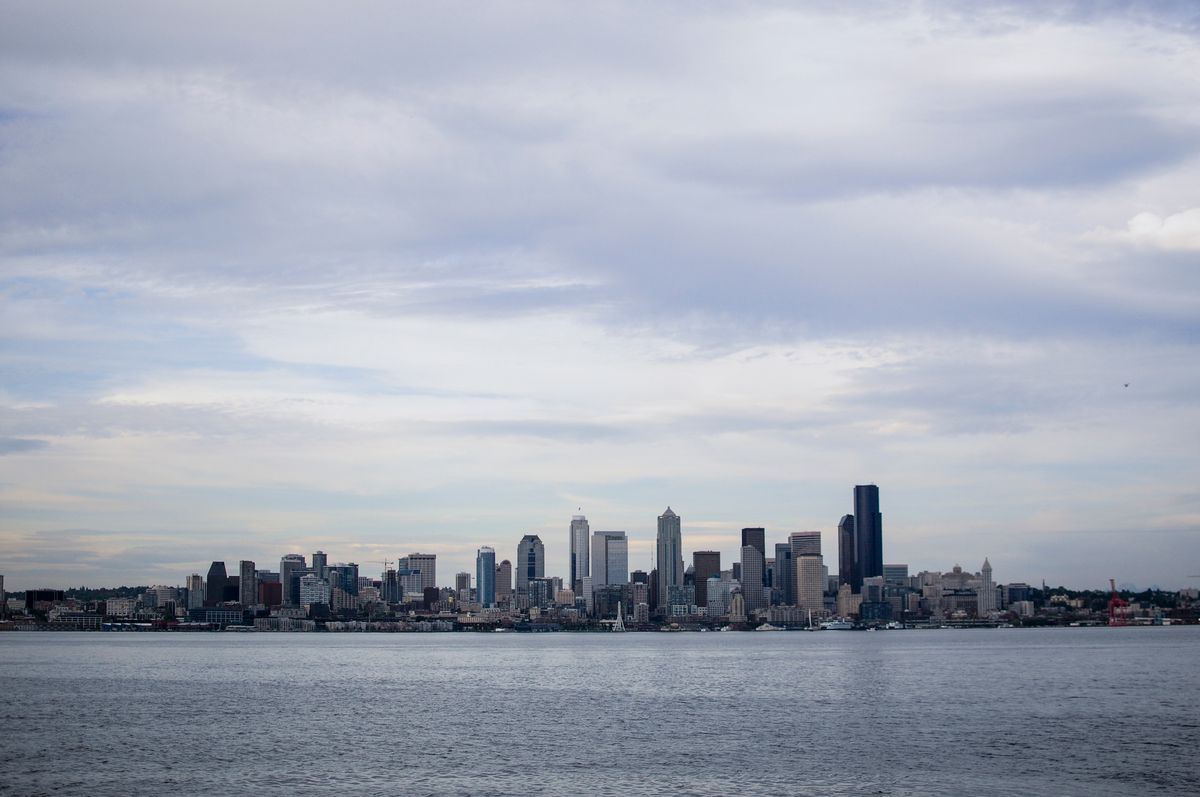
Seattle sits on an isthmus between Puget Sound and Lake Washington, and it is built on seven hills that rise as high as 500 feet. Water and hills divide the city into many separate pieces.
That geography creates distinct neighborhoods, each with its own main street, and it creates the views the city is known for. It also means steep blocks, narrow streets with cars parked on both sides, and many older houses and apartment buildings that were not designed with a moving truck in mind.
The job base is broad. Amazon moved into Seattle proper in the 1990s, Starbucks opened its first shop at Pike Place Market, and Boeing employs many people across the region. If you are moving to Seattle for a job in the city, living on the west side of the lake keeps you off the bridges.
Moving to Bellevue: the heart of the Eastside
Bellevue sits on the east shore of Lake Washington, in the group of cities locals call the Eastside. It is not a bedroom community. Downtown Bellevue is a business center in its own right, and large technology employers are spread across the Eastside.
Compared with Seattle, Bellevue is newer and more spread out. Downtown has its own cluster of office and residential towers, and beyond it most of the city is single-family neighborhoods and apartment and condo communities with driveways, garages, and wider streets. For people who work at an Eastside employer, living on the Eastside usually means a shorter and more predictable commute.
The trade-off is the reverse of the one Seattle offers. Moving to Bellevue generally gets you easier parking and newer buildings, with less of the dense, walk-everywhere city life across the lake.
Moving to Seattle or Bellevue from another state? Get a free, no-obligation flat-rate quote from Allpoints.
The bridge question: commuting between Seattle and Bellevue
Two highways cross Lake Washington between Seattle and Bellevue, and both ride on floating bridges.
- State Route 520 runs from Seattle's Montlake area to Medina, next to Bellevue, on the Evergreen Point Floating Bridge. At 7,710 feet, its floating span is the longest floating bridge in the world
- Interstate 90 runs from Seattle across two floating bridges to Mercer Island, then on into Bellevue
Because there are only two highway crossings, a stalled car on one can back up both. If your household will have one job on each side, drive both routes at rush hour before you choose a home. Ask the Washington State Department of Transportation about current bridge tolls, and look at Sound Transit's map for bus and light rail options, because the system is still expanding.
Weather, taxes, and paperwork: the same on both sides
Weather. The two cities share one climate. Seattle averages about 37 inches of precipitation a year, which is not extreme, but it arrives on about 150 rainy days, and gray skies are common. Summers are the reward: drier and mild. Winters are cool and wet rather than snowy, with an average January temperature in the low 40s.
Earthquakes. The region has a history of strong earthquakes, including a magnitude 6.8 quake in 2001. After you move in, anchor tall bookcases and heavy furniture to the wall, and ask your insurance agent how earthquake coverage works.
Taxes. Washington does not tax wages or other ordinary income, though it does tax large capital gains. Sales and property taxes are set partly at the local level, so they differ a little between the two cities. Confirm current figures with the Washington Department of Revenue, and talk with a CPA about your situation. Our guide to moving to a state with no income tax explains what changes and what does not.
License and registration. The Washington State Department of Licensing sets the deadlines for new residents. See moving to Washington State for the steps.
What moving day is like in Seattle and in Bellevue
From the truck, the two cities are very different jobs.
- Seattle hills and streets. A tractor-trailer often cannot park on a steep, narrow residential block. Expect a smaller shuttle truck or a longer carry in some neighborhoods, and make sure it is in your quote. Many older homes sit above the street, so count the stairs for your mover
- Seattle parking. Curb space is scarce. Ask the Seattle Department of Transportation or your building manager how to reserve space for the truck, and do it well ahead
- Towers in both downtowns. Condo and apartment buildings usually require a reserved freight elevator, a loading dock time, and a certificate of insurance from your mover. Our high-rise moving guide covers the details
- Bellevue neighborhoods. Driveways and wider streets make truck access simpler, but condo associations and HOAs often set move hours and parking rules. Get them in writing
- Rain on either side. From October through spring, plan for a wet day. Floor runners, shrink wrap, and a short covered path keep things dry. See moving in the rain
If you can choose your month, summer is the driest stretch and the easiest time to move here. It is also the busiest, so book early.
Seattle or Bellevue: how to decide, and how the move works
Start with the commute. Pick the side of the lake where the longest daily drive ends, then choose the kind of home you want. If you want older character, walkable blocks, and city energy, look in Seattle. If living on the Eastside near your office with a garage and a quieter street matters more, look in Bellevue.
Either way, getting your household here is the same process. Allpoints is a family-owned mover based in Metro Atlanta, and we work as a contract carrier for one of the biggest van line moving companies in the country. That network is what lets us serve as long-distance movers to Washington State from anywhere in the United States. Our long-distance moving service is quoted as a flat rate based on distance, your inventory, and added services such as packing. Book 3 to 4 weeks ahead, and earlier for a summer date. Our cross-country moving timeline shows what to do each week, and you can request a free quote any time.
Key takeaways
- Seattle is the dense, hilly big city, and Bellevue is the newer, more suburban center of the Eastside
- Two floating-bridge highways link the two sides of Lake Washington, so choose your side by where you work
- Weather and state taxes are the same on both sides of the lake
- Seattle moves often need a shuttle truck, reserved curb space, and extra time for stairs and hills
- Summer is the driest time to move, and the busiest