Quick answer
Miami is the biggest and most international, with tropical weather and high-rise living. Tampa is a Gulf Coast port city with a strong job mix. Orlando is inland, built around tourism and newer suburbs. Jacksonville is the largest city by population and area, with the coolest winters. None has a state income tax.
In this guide
- Miami vs. Tampa vs. Orlando vs. Jacksonville at a glance
- Moving to Miami: international, tropical, and vertical
- Moving to Tampa: a Gulf Coast port with a broad job mix
- Moving to Orlando: inland, newer, and built around visitors
- Moving to Jacksonville: the biggest city, with real seasons
- Hurricanes, taxes, and insurance in all four cities
- What moving day is like, and how the move works
- Frequently asked questions
Miami vs. Tampa vs. Orlando vs. Jacksonville at a glance
Florida is one of the most populous states, and most newcomers end up in one of four metro areas. They are farther apart than people expect. Jacksonville sits near the Georgia line and Miami near the southern tip of the peninsula, a long drive apart, and the weather, the housing, and the pace change along the way.
| What to compare | Miami | Tampa | Orlando | Jacksonville |
|---|---|---|---|---|
| Where it sits | Atlantic coast, on Biscayne Bay | Gulf Coast, on Tampa Bay | Inland Central Florida | Atlantic coast, on the St. Johns River |
| City population, 2020 census | 442,241 | 384,959 | 307,573 | 949,611 |
| Metro area | About 6.4 million, the largest in Florida | More than 3.4 million | About 2.9 million | More than 1.7 million |
| Known for | International banking and trade, the cruise port, a high-rise skyline | The port and a broad mix of employers | Theme parks, tourism, and conventions | The port, two Navy bases, banking, insurance, and logistics |
| Climate | Tropical | Hot, humid summers and mild winters | Hot, humid summers and mild winters | Hot summers and the coolest winters of the four |
| Average summer high | About 91°F | Hot and humid | Hot and humid | About 92°F |
| Average January low | About 61°F | Mild | Mild | About 42°F |
Populations are from the 2020 census, metro figures are recent Census Bureau estimates, and temperatures are climate normals. Jacksonville has the most residents inside its city limits, but the Miami metro area is by far the largest in the state.
Moving to Miami: international, tropical, and vertical
Miami anchors a metro area that stretches north through Fort Lauderdale to West Palm Beach. It is a center of international banking and trade, home to one of the busiest cruise ports in the world, and a city where most residents speak Spanish at home.
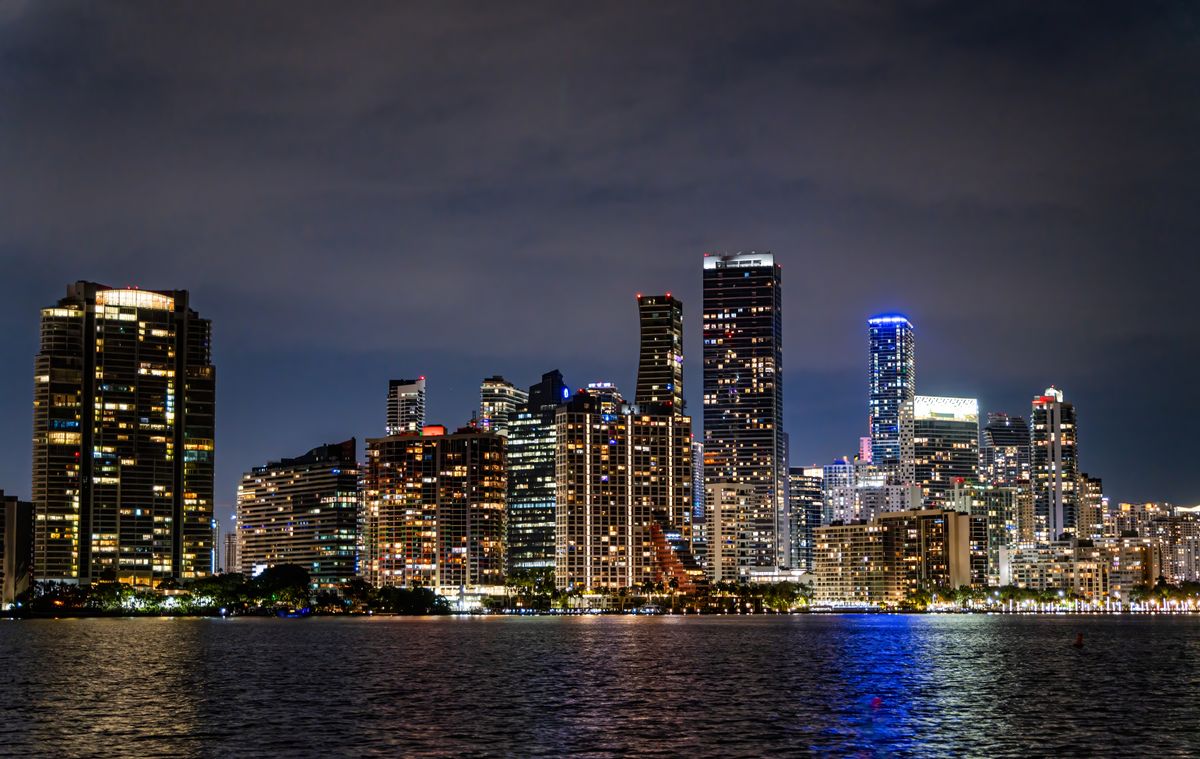
Housing here goes up. Miami has one of the largest skylines in the country, with more than 300 high-rises. Brickell is the financial district, Edgewater is mostly residential towers, and Wynwood is the arts district. Older neighborhoods such as Coconut Grove, Coral Way, and Little Havana offer single-family streets, and Coconut Grove is known for narrow, winding roads under a heavy tree canopy.
Anyone moving to Miami should know two things about the land. Most neighborhoods sit only about 6 feet above sea level, and the wet season runs from May to October. Ask about flood zones early.
Moving to Tampa: a Gulf Coast port with a broad job mix
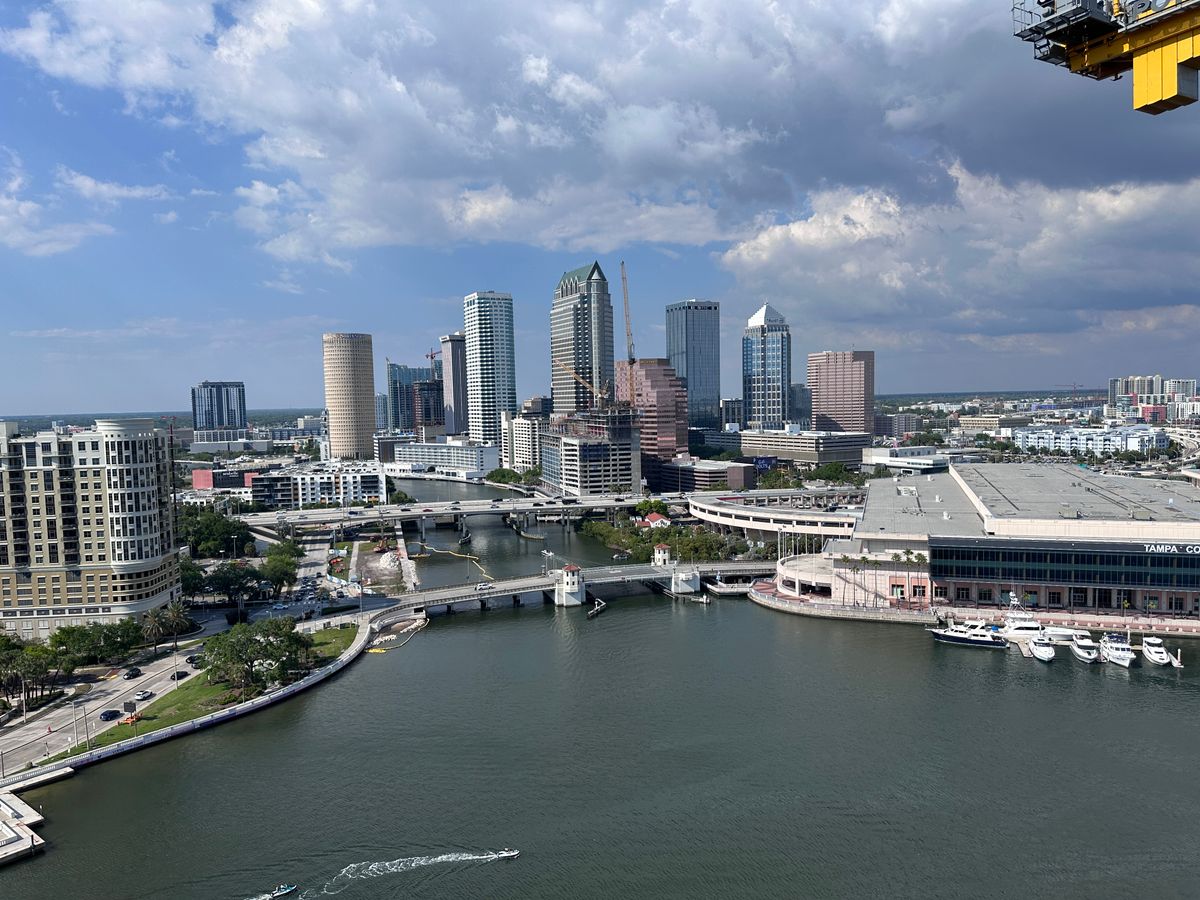
Tampa sits on the Gulf Coast at the top of Tampa Bay, with St. Petersburg and Clearwater across the water. The metro area is the second largest in Florida. The economy is a broad mix built around a busy port. People moving to Tampa choose among historic neighborhoods near downtown, newer high-rise districts on the water, and suburbs that spread north and east.
Tampa is low and surrounded by water, so storm surge is a serious risk. In 2024, Hurricane Helene set record storm surge levels in many parts of Tampa Bay even though it made landfall far to the north, near Perry. Summer thunderstorms are frequent, with plenty of lightning.
Chosen your Florida city? Get a free, no-obligation flat-rate quote for the move to Miami, Tampa, Orlando, or Jacksonville.
Moving to Orlando: inland, newer, and built around visitors
Orlando is the only inland city of the four. Tourism drives the economy, led by the big theme parks, along with conventions and the businesses that serve millions of visitors.
People moving to Orlando choose among older neighborhoods near downtown, newer planned communities, and a ring of suburbs in every direction, many of them built in the last few decades.
Being inland takes storm surge off the table, but not hurricanes, which can still bring damaging wind and rain. In summer, strong afternoon thunderstorms are common. The region is dotted with lakes, so ask about drainage and flood history, and get a thorough home inspection.
Moving to Jacksonville: the biggest city, with real seasons
Jacksonville is the most populous city in Florida and the largest city by area in the contiguous United States, at about 747 square miles of land. The city and Duval County merged their governments in 1968, which explains the size. It straddles the St. Johns River, about 12 miles south of the Georgia line, with its own Atlantic beaches.
The port, Naval Air Station Jacksonville, Naval Station Mayport, banking, insurance, health care, and logistics drive the economy. Neighborhoods near downtown include Riverside, Avondale, San Marco, and Springfield. Farther out are the Southside, Arlington, Mandarin, and the beach communities, with Ponte Vedra Beach nearby.
Jacksonville has the coolest winters of the four, with 10 to 15 nights a year at or below freezing. It has taken only one direct hurricane hit since 1871, though storms passing offshore have still flooded the city. For people moving to Jacksonville from the North, it feels the least like a change of climate.
Hurricanes, taxes, and insurance in all four cities
Hurricane season. Every part of Florida faces hurricane risk. The Atlantic season runs from June 1 to November 30, and the National Hurricane Center puts the peak at September 10, with most activity from mid-August to mid-October. If your move falls in that window, build a few flexible days into the plan. Our guide to moving during hurricane season explains how.
Taxes. Florida has no personal income tax, so that part is the same in every city. Sales tax rates and property taxes vary by county. Check current figures with the county property appraiser, and talk with a CPA about your own situation.
Insurance. Homeowners and flood insurance costs vary widely by address and by the age and elevation of the house. Get insurance quotes before you make an offer, not after.
For licenses, registration, and other first steps, see our moving to Florida guide.
What moving day is like, and how the move works
- Miami. Condo towers usually require a reserved freight elevator, set move hours, and a certificate of insurance from your mover. Book the elevator before you book the truck
- Tampa. Summer lightning stops outdoor work until it passes, so allow extra time for afternoon deliveries
- Orlando. Many planned communities have HOA and gate rules for trucks. Get them in writing, and expect a daily rain delay in summer
- Jacksonville. The city is so large that a move across town can be a long drive with river bridges in between
- All four. Heat and humidity last most of the year. Crews start early, and anything that can melt or warp should not sit in a hot truck. See our summer heat guide
There is no single best city in Florida to live in. Choose Miami for international business and city life, Tampa for a balanced Gulf Coast job market, Orlando for newer suburbs and hospitality work, and Jacksonville for space, Navy ties, and cooler winters.
Our long-distance moving service is quoted as a flat rate based on distance, your inventory, and added services such as packing. Allpoints is family-owned, based in Metro Atlanta, and works as a contract carrier for one of the biggest van line moving companies in the country, so we can move you to Florida from anywhere in the United States. Book 3 to 4 weeks ahead, and earlier in summer. Coming from the Northeast? Read moving from New York to Florida, then request a free quote.
Key takeaways
- Miami is the largest metro and the most vertical, with tropical weather and low elevation
- Tampa and Miami face the most storm surge risk, Orlando is inland, and Jacksonville has the coolest winters
- Jacksonville is the largest city in Florida by population and the largest by area in the contiguous United States
- Florida has no personal income tax, but insurance and property taxes vary a lot by address
- Hurricane season runs June 1 to November 30, so build flexible days into a summer or fall move