Quick answer
When moving with pets, see your vet a few weeks ahead, update tags and microchip details, and keep routines steady while you pack. On moving day, keep dogs and cats in a closed room or out of the house. Movers do not transport pets, so they travel with you.
In this guide
How to prepare a dog or cat before a move
Moving with pets goes more smoothly when you start two to four weeks ahead. Dogs and cats cannot be told what is happening, so the preparation is yours to do.
- See your vet. Tell them where you are going and how you plan to travel. Ask for copies of vaccination records and enough of any prescription to cover the trip and the first weeks
- Ask about paperwork. Rules for bringing pets into another state are set by the destination state, and if you fly, the airline has its own policy as well. Your vet, the destination state veterinarian's office, and your airline can tell you whether a health certificate is needed and when it must be dated
- Bring travel health questions to the vet. Anxiety, motion sickness, an older pet, or a long drive are all worth a conversation. Do not give any medication or calming product without their guidance
- Update identification. Put your cell number on the collar tag and make sure the microchip registry has your current contact details
- Check the rules at the new place. Leases, homeowner associations, and cities set their own pet deposits, size or breed limits, and leash and license rules
- Practice with the carrier or crate. Leave it open in the living room with a blanket and treats inside, then take a few short car rides
- Take a clear, current photo of each pet in case one gets loose
Packing up the house with pets around
Pets read change in the house long before moving day. Bring the boxes in early, pack a little at a time, and keep meals and walks on the usual schedule.
- Leave the bed, bowls, litter box, and toys in their usual spots until the last day
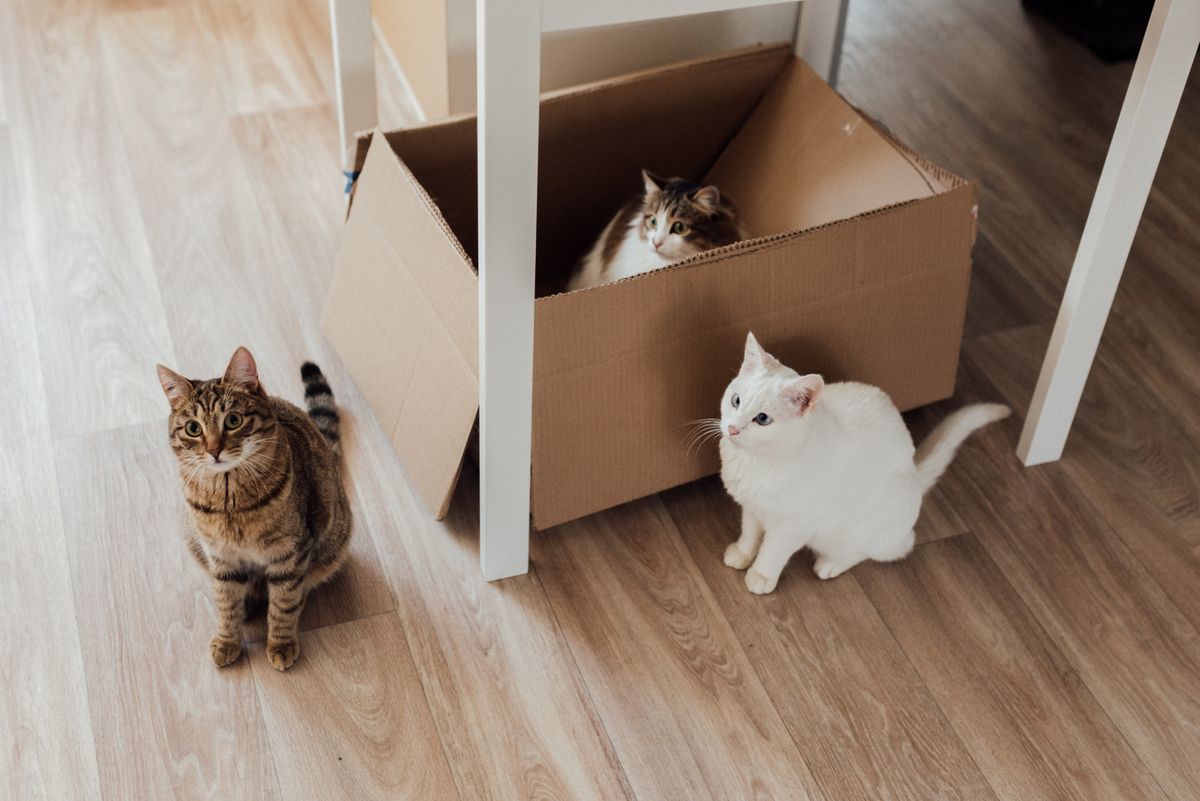
- Check every open box before you tape it shut. Cats climb into boxes and go quiet
- Keep packing tape, plastic wrap, and cleaning supplies out of reach
- Do not wash their bedding right before the move. The familiar smell helps in a strange place
If weeks of half-packed rooms would be hard on an anxious animal, a professional crew shortens the disruption. Our packing services include the boxes, paper, bubble wrap, and tape, and the work happens close to moving day instead of dragging on.
Pets on moving day: the safe room plan
The plan for pets on moving day comes down to keeping them away from open doors. Loading day is the riskiest day of the move for a dog or cat. The doors are propped open for hours, strangers are carrying furniture, and the noise is constant. One open door is all it takes for a frightened animal to bolt. Pick one of two plans.
Plan A: out of the house
A friend, a relative, a boarding kennel, or dog daycare for the day. Book early, since many places ask for vaccination records.
Plan B: a closed safe room
- Empty a bathroom or small bedroom the night before
- Set it up with the bed, water, toys, and the litter box for cats
- Close the door and tape a sign on it: pet inside, do not open
- Tell the crew leader which room it is before work starts
- Move your pet to the car yourself, in a carrier or on a leash, after the truck is loaded
One thing to know when you plan: movers do not transport pets. Your dog or cat travels with you, never in the moving truck. Our list of what movers won't move covers the other items that have to ride with you.
Mention your pets when you book your local move so the crew knows what to expect at the door.
You look after the dog and the cat. Our licensed and insured crew will look after the packing, the loading, and the truck.
Driving or flying on a long-distance move with pets
On a long-distance move with pets, the household goods go on the truck and the animals go with you. Most families drive.
By car
- Cats ride in a carrier that is secured so it cannot slide. Dogs ride in a crate or a travel harness, not loose and not on a lap
- Stop every few hours for water and a walk. Clip the leash on before the car door opens, every time
- Never leave a pet in a parked car. In a Georgia summer the inside of a parked car heats up dangerously fast
- Book pet-friendly hotels ahead of time and confirm the pet policy and fees by phone
- Ask your vet how to handle meals and water on travel days
By air
Airline pet rules can differ from one carrier to the next. Call the airline before you buy your own ticket and ask about cabin and cargo options, carrier dimensions, and required paperwork. Then take that list to your vet.
Our post on whether to drive or fly when moving compares the two. While you travel, we handle the rest: our long-distance moving service is quoted at a flat rate based on distance, inventory, and added services.
Moving with a dog versus moving with cats
Dogs and cats handle change differently. Moving with a dog is mostly about exercise, routine, and staying close to you. Moving with cats is mostly about territory and a safe place to hide.
| Stage | Dogs | Cats |
|---|---|---|
| Before the move | Extra walks and play to burn off nervous energy | Carrier left out for weeks so it becomes ordinary |
| Moving day | Daycare, a friend's house, or a closed room | A closed room with the litter box, or boarding |
| On the road | Crate or harness, leash on before the door opens | Secured carrier for the whole ride |
| New home | Leash walk through the house, yard, and block | One quiet room first, then the rest of the house slowly |
What to pack in a pet travel kit
Keep one bag for each pet in your own vehicle, not on the truck:
- Food for several days, a jug of water, and bowls
- Leash, spare collar with tags, and waste bags
- Litter, a small litter pan, and a scoop
- Medications and a copy of the vet records
- Bed or blanket and a favorite toy
- Paper towels, trash bags, and a pet-safe cleaner
- The current photo and your vet's phone number
Helping pets adjust to a new home
Helping pets adjust to a new home starts before you let them out of the carrier. Walk the house and yard first. Look for gaps in the fence, gates that do not latch, loose window screens, and anything the last residents left behind, such as pest bait.
- Cats: start them in one quiet room with food, water, litter, and their bed. Open up the rest of the house over several days, and keep them indoors for the first few weeks so they learn that this is home
- Dogs: walk them through the house and yard on a leash, then keep walks and meals at the usual times. Try not to leave them alone for long stretches in the first days
- Keep the old gear. Same bed, same bowls, same toys. This is not the week to replace anything
- Give it time. Hiding, a smaller appetite, or an accident in the house are common at first. If it continues, or your pet stops eating, call a vet
Then finish the paperwork: update the microchip registry and tags with your new address, choose a new vet and find the nearest emergency animal clinic before you need one, and ask your new city or county about pet licensing. The moving checklist covers the rest of your address changes.
Key takeaways
- See the vet early and bring every travel health question to them
- Update collar tags and microchip details before and after the move
- On moving day, use a closed safe room or get pets out of the house
- Movers do not transport pets, so plan how they will travel with you
- Start cats in one room and walk dogs on a leash until the new home is familiar