
Quick answer
Start by confirming who has legal authority over the estate, then secure the house and find the important documents before anything is removed. Let family choose keepsakes next, sort the rest room by room into keep, sell, donate, and discard, and finish with the estate sale, donation pickups, moving, storage, and cleaning.
In this guide
Before you start clearing out a loved one's home
Clearing out a loved one's home is part paperwork, part heavy lifting, and part grief. A plan helps with all three. Before anything leaves the house, settle three things.
- Who has authority. The executor or administrator of the estate decides what happens to the contents. If the estate is in probate, the executor should check with the estate attorney before anyone removes, gives away, or sells anything. Rules vary by state, and this article is general information, not legal advice
- Whether the house is secure. Collect the keys, lock the doors and windows, pick up or forward the mail, and keep the utilities on. Call the homeowner's insurance agent and ask how the policy treats a house nobody is living in
- How much time you have. A rental with a lease ending needs a faster plan than a paid-off house. Find the real deadline before you set the pace
Cleaning out a parent's house is rarely a one-weekend job. If there is no deadline, give yourself room.
Important documents to look for first
Paper comes before furniture. The executor needs certain records to settle the estate, and they are easy to lose once sorting starts. Look for these important documents after a death and hand them to the executor:
- The will, any trust documents, and letters of instruction
- Deeds, vehicle titles, and mortgage or loan papers
- Life, home, auto, and health insurance policies
- Bank, retirement, and investment statements
- Recent tax returns
- Birth, marriage, and military discharge certificates, and Social Security cards
- Safe deposit box keys, the combination to a home safe, and any list of account passwords
- Unpaid bills and anything that renews automatically
Check the desk and the filing cabinet first, then the places people actually tuck things away: a fireproof box in a closet, dresser drawers, coat pockets, purses, the freezer, and between the pages of books. Until that search is finished, do not throw out any paper without looking at it. Label one box for the executor and put every find in it.
Gather valuables at the same time: jewelry, cash, coin or stamp collections, and firearms. Keep a written list of what was found and where it went.
The order to work in: an estate cleanout checklist
- Walk through and take photos. Photograph every room before anything moves. The pictures help the executor and relatives who cannot be there
- Clear what is perishable. Empty the refrigerator, take out the trash, and remove plants and anything that will spoil or draw pests
- Pull documents and valuables. Work through the list above before any sorting begins
- Let family choose. Give relatives a set window to claim keepsakes, in line with the will
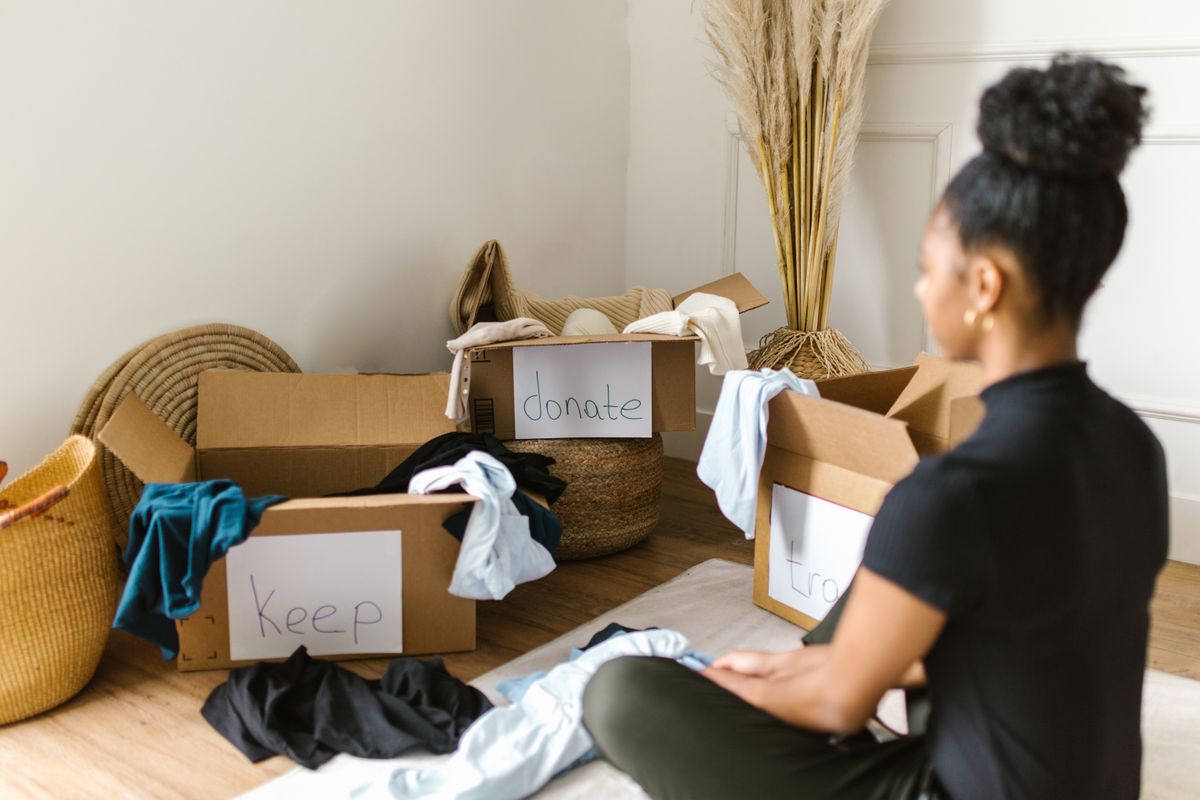
- Sort room by room. Use four groups: keep, sell, donate, and discard. Finish one room before starting the next
- Sell and donate. Hold the sale or schedule the pickups once the family items are out
- Move, store, and clean. Deliver what is going to relatives, store what is undecided, haul away the rest, and clean the house
Start with the rooms that carry the least emotion: the bathroom, the pantry, the laundry room, the garage. Early progress makes the bedroom and the photo albums easier to face later.
| Stage | What gets done |
|---|---|
| First visit | Secure the house, take photos, clear perishables, find documents and valuables |
| Early weeks | Family selections, then sorting the easy rooms |
| Middle weeks | Bedrooms, closets, attic, and basement, then the estate sale or donation pickups |
| Final days | Moving and storage, haul-away, cleaning, and returning the keys |
Use this as an estate cleanout checklist, not a fixed schedule. An apartment moves through the stages quickly. A long-time family home can take many weekends.
Furniture going to family in different cities or states? We can pack, load, and deliver each piece where it belongs.
How to divide keepsakes among family
The will comes first. Anything it names goes where it says, and the executor has the final word on the rest. For everything else, a simple process that everyone agrees to ahead of time prevents most arguments.
- Ask for wish lists early. Have each person write down the few things that matter most to them before anyone starts claiming items in the house
- Take turns. Draw numbers and choose one item at a time, reversing the order each round
- Use colored stickers. One color per person makes it obvious what is spoken for and what is still open
- Share what can be copied. Photos, letters, recipes, and home movies can be duplicated so nobody has to give them up
- Include people who live far away. Send them the walkthrough photos and set aside what they choose
- Write it down. A plain list of who took what protects the executor and avoids confusion later
When two people want the same piece, set it aside and come back to it at the end.
Estate sale or donation: what to do with the rest
Once the family has what it wants, there are four ways to clear the rest. Most families use more than one.
- Estate sale. Worth considering when the house holds a lot of furniture, tools, collectibles, or antiques. Estate sale companies price, stage, and run the sale, usually for a share of the proceeds. Ask what the fee covers and what happens to anything unsold
- Selling single items. A consignment shop, an auction house, or a classified ad can work for a few valuable pieces. Get an appraisal before pricing jewelry, art, or antiques
- Donation. Many charities pick up furniture and household goods in usable condition. Call ahead, since most have rules about mattresses, large appliances, and upholstery. Keep the receipts for the executor
- Haul-away. What cannot be sold or donated goes to a junk removal service or a rented dumpster
Choosing an estate sale or donation mostly comes down to volume and time. A sale takes longer to arrange, and a donation pickup can often be scheduled sooner. Our guide on where to donate furniture and household goods covers what charities accept.
Handle a few things separately. Ask a pharmacy how to dispose of leftover medications. Paint, solvents, propane, and other chemicals go to a household hazardous waste site, and they are also on the list of what movers won't move.
What to move and what to store
Family pieces rarely all go to one place, so sort them by where they are headed.
What to move now
Move anything with a clear owner and a place to put it. Group items by destination and label every piece with the person's name. One truck can make several stops, and a long-distance move can carry furniture to a relative in another state.
What to store
Storage makes sense for items that are spoken for but cannot be received yet, and for the few things the family truly cannot decide on. Set a date to revisit the unit so it does not become permanent. For wood furniture, photos, artwork, and paper records, ask about a climate-controlled unit.
Moving and storing inherited furniture goes better with careful packing. Wrap wood in moving blankets, pack china and framed photos the way you would for any move, and keep an inventory of what went where. If heirlooms are going on a truck, read about moving insurance and valuation first.
When to bring in help
Bring in help when the family is short on time, lives out of town, or cannot safely carry what needs to move. You do not have to hand over the whole job. Common arrangements include:
- Packing services for the china cabinet, artwork, and other fragile keepsakes
- Labor-only help to load a rental truck or carry heavy furniture out of the house
- A local move that delivers furniture to several family homes in one day
- A long-distance shipment to relatives in other states
Allpoints Moving Services is a family-owned mover based in Metro Atlanta, in business since 1999, licensed and insured, and we move customers nationwide. Tell us what is going where and we will put together a plan and a free, no-obligation quote.
Key takeaways
- Confirm who has authority first. In probate, the executor should check with the estate attorney before anything is removed or sold
- Find documents and valuables before sorting anything else
- Work from the least emotional rooms to the most
- Agree on a fair process for keepsakes and write down who took what
- Move what has an owner, store only what needs more time, and set a date to revisit it