

Quick answer
Start decluttering six to eight weeks before your move. Work one room at a time, beginning with storage areas, and sort everything into four groups: keep, sell, donate, and toss. Let go of anything you have not used in a year, would not pay to move, or that will not fit the new home.
In this guide
Why decluttering before a move saves money
Moving costs follow volume. A local move is typically billed by the hour, and every extra box and piece of furniture adds time at both ends. A long-distance move is quoted as a flat rate based on distance, inventory, and added services, so a shorter inventory means a lower quote.
There are quieter savings too. Fewer belongings need fewer boxes and less tape and paper. Packing takes fewer evenings. Unpacking goes faster because you are not finding homes for things you did not want in the first place. And it is far easier to decide about a box of old cables now than after you have paid to move it.
When to start decluttering before a move
Six to eight weeks ahead is comfortable for most households. That leaves time to sell what is worth selling and schedule donation pickups, which may need to be booked ahead.
- Eight weeks out: garage, attic, basement, and storage closets. These hold the most forgotten items and the fewest things you use daily
- Six weeks out: guest rooms, bookshelves, the linen closet, and the home office
- Four weeks out: bedrooms, clothes closets, kids' rooms, and the living room
- Two to three weeks out: the kitchen, pantry, and bathrooms
- Final week: the last donation run and trash pickup. Nothing left to decide
Short on time? Do the storage areas and the kitchen and skip the rest. Those two give the biggest return for the hours spent.
The keep, sell, donate, toss method
Set up four boxes or four corners of the room, and touch each item once.
| Pile | What belongs in it | What happens next |
|---|---|---|
| Keep | Things you use, need, or love, and that fit the new home | Pack it, starting with what you use least |
| Sell | Good-condition items with real resale value: furniture, tools, bikes, electronics | List it or hold a moving sale within two weeks |
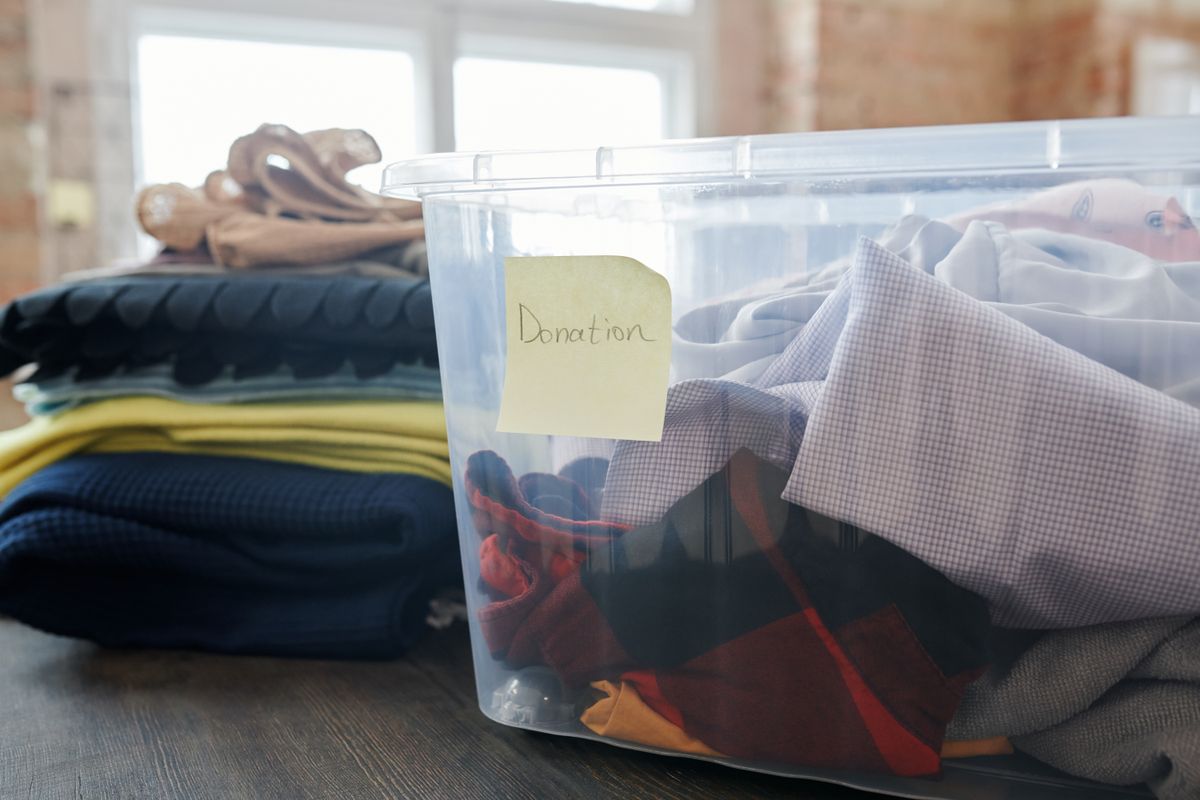
| Donate | Clean, working items someone else can use | Bag it, load it in the car, and schedule a drop-off or pickup |
| Toss | Broken, stained, expired, or incomplete items | Trash, recycling, or a hazardous waste drop-off |
When you get stuck on an item, ask four questions:
- Have I used it in the past year?
- Would I pay to have it packed and carried into the new house?
- Does it fit the new space and the way we will live there?
- If it were lost in the move, would I replace it?
Two or more answers of no, and it goes.
Finished sorting? Get a free, no-obligation quote based on what you are actually moving.
How to declutter room by room
Finish each space before starting the next. A house that is half-sorted everywhere is harder to live in than one with three finished rooms.
- Garage, attic, and basement: duplicate tools, dried-up paint, sports gear nobody plays with, boxes that were never opened after the last move
- Kitchen: duplicate utensils, chipped dishes, single-use gadgets, storage containers without lids, expired pantry food
- Closets: clothes that do not fit or have not been worn in a year, worn-out shoes, extra hangers
- Bathrooms: expired medicine and old cosmetics. Ask your pharmacy how to dispose of medications safely
- Kids' rooms: outgrown clothes and toys. Involve children in choosing what to pass on
- Home office: old manuals, dead electronics, and paper files. Ask your accountant how long to keep tax records, and shred what you no longer need
- Living room: books you will not reread, movies and music you no longer play, decor that will not suit the new house
What to get rid of before moving
Some things are almost never worth the space on the truck:
- Anything movers cannot carry. Paint, propane, gasoline, pool chemicals, and many cleaners are on the list of what movers won't move. Use them up or take them to a local hazardous waste collection site
- Worn-out mattresses and sagging sofas you were planning to replace anyway
- Cheap flat-pack furniture that has already been assembled and taken apart once. It rarely survives a second round
- Old televisions, computers, and boxes of cables. Look for an electronics recycling event in your area
- Open and perishable food. Eat down the freezer and pantry in the last month
- Stacks of magazines, phone books, and used moving boxes that have gone soft
Downsizing before a move and deciding on keepsakes
Downsizing before a move starts with a tape measure. If the new home is smaller, get the room dimensions, sketch a simple floor plan, and mark where the large furniture will go. Anything without a place on the plan goes on the sell or donate list.
Sentimental items are the hardest, so save them for last, when you have had weeks of practice making decisions.
- Keep the best one, not the whole collection
- Photograph bulky keepsakes, children's artwork, and trophies before letting them go
- Offer family pieces to relatives now, and set a date for them to pick up
- Limit each person to one keepsake box
- Decide only for yourself. Other people's belongings are their call
Clear the piles before packing starts
Decluttering is not finished until the piles leave the house. Set a deadline about two weeks before moving day.
- Sell first. See how to run a moving sale for pricing and timing
- Donate what did not sell. Our guide on where to donate furniture and household goods explains who takes what
- Toss the rest on your regular trash day, or arrange a bulk pickup with your city or hauler
Once you know what is going, count it. Our packing estimator tells you how many boxes the remaining household needs, and an accurate inventory makes for an accurate quote. Request a free quote when the sorting is done, and ask about packing services if you would like our crew to box up what is left.
Key takeaways
- Less to move means fewer hours on a local move and a shorter inventory on a long-distance quote
- Start six to eight weeks out, with storage areas first and the kitchen last
- Sort into keep, sell, donate, and toss, and touch each item once
- Measure the new home before deciding on large furniture
- Get every pile out of the house about two weeks before moving day