Quick answer
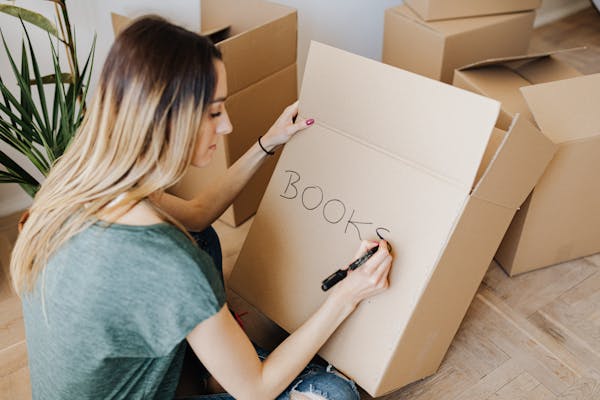
To label moving boxes, write four things on each one: the room it goes to in the new home, a short list of contents, a box number, and any handling note such as fragile or open first. Put the label on the top and two sides, and track the numbers on a simple inventory list.
In this guide
- How to label moving boxes, and why it is worth ten seconds a box
- What you need to label moving boxes
- What to write on every moving box
- Where to put the label on the box
- Color coding moving boxes by room
- Numbering moving boxes and keeping a box inventory list
- Fragile labels, this side up, and open first
- How the labels pay off on moving day
- Frequently asked questions
How to label moving boxes, and why it is worth ten seconds a box
Labeling feels like a chore when you are packing and like a gift when you are unpacking. A good label does three jobs:
- It tells the crew where to set the box down. Boxes that land in the right room the first time do not have to be carried twice. On a local move billed by the hour, that saves money
- It tells you what is inside so you can find the coffee maker without cutting open eleven boxes
- It lets you count. Numbered boxes and a list show at a glance whether everything that left the old home arrived at the new one
The system below takes about ten seconds a box. It works the same whether you are moving across town or across the country.
What you need to label moving boxes
- Thick permanent markers in black, several of them, so there is always one within reach
- Colored tape, colored stickers, or colored markers if you want to color code
- Fragile labels or a red marker
- A notebook or a spreadsheet for the inventory
- Plain paper and painter's tape for door signs at the new home
Preprinted moving box labels are convenient but not required. Clear handwriting in thick marker works as well. If you are reusing boxes, cross out or cover every old label first so there is only one set of instructions on the box.
What to write on every moving box
Every box gets the same four pieces of information, always in the same order:
| Item | What to write | Example |
|---|---|---|
| Room | The room it is going to in the new home | KITCHEN |
| Contents | Three to five words, specific enough to be useful | Everyday plates, bowls, mugs |
| Number | The next number in your sequence | K-07 |
| Handling | Only if needed | FRAGILE, THIS SIDE UP, OPEN FIRST |
Two details matter here. First, label by destination, not by where the box was packed. If the things from the hall closet are going to the new basement, the box says BASEMENT. Second, agree on room names before you start. "Bedroom 2" means nothing to a crew, and "Emma's room" only works if there is a matching sign on the door.
Where to put the label on the box
Write the label on the top and on two adjacent sides. Boxes get stacked, and a label that is only on the top disappears the moment another box goes on it. With two sides marked, at least one label stays visible however the box is turned in a stack.
Write the room name large enough to read from across the room. Keep the contents line smaller. Do not write on the tape, because marker rubs off tape easily.
Would you rather not pack at all? Get a free quote for a move with full or partial packing.
Color coding moving boxes by room
Color coding moving boxes adds a signal people can read from twenty feet away without stopping to read. Assign one color to each room, then mark each box with a strip of colored tape or a sticker next to the written label, on the same top and two sides.
- Pick a color for each room in the new home and write the key on one sheet of paper
- Mark each box with its room color as you seal it
- At the new home, tape a matching colored sign with the room name on each door frame
- Tape a copy of the key by the front door and hand one to the crew leader
Color is an addition, not a replacement. Always write the room name too. Tape falls off, stickers look alike in a dim garage, and not everyone sees colors the same way.
Numbering moving boxes and keeping a box inventory list
Numbering moving boxes turns a pile into a list you can check. Use a room prefix and a number, such as K-01 for the first kitchen box and MB-01 for the first main bedroom box. Then record each one on a box inventory list as you seal it:
- Box number
- Destination room
- Contents, in a little more detail than fits on the box
- Notes, such as fragile, open first, or going to storage
A notebook works. A spreadsheet is better, because you can search it for the word "blender" and get a box number in seconds. For boxes with many small items, take a photo of the contents before you close the flaps.
The list is also the place for the details you should not write on the outside. Do not label a box "jewelry" or "cameras". Give it a plain description on the box and keep the real contents on your list. Better still, move small valuables and important documents in your own car.
Fragile labels, this side up, and open first
Handling notes only work if they are rare. If every box says fragile, the word stops meaning anything.
- Fragile labels go on boxes with glass, dishes, ceramics, and electronics. Put them on the top and at least two sides
- This side up with an arrow goes on anything that can leak, spill, or crush if turned over, such as lamps, small appliances, and bottles
- Open first goes on the handful of boxes you need on the first night: bedding, towels, a shower curtain, the coffee maker, basic dishes, and phone chargers
- Heavy is a courtesy to whoever lifts the box next, including you
Labels do not replace good packing. A fragile sticker on a half-empty box of loose glasses will not save them. Our moving and packing tips cover how to pack breakables so the label is a backup, not the plan.

How the labels pay off on moving day
Before the truck is unloaded, walk the new home with the crew leader and point out which room is which. With signs on the doors and a room name on every box, the crew can place each box without stopping to ask.
As boxes come in, check them off your list or have one person count by room. Stack boxes label side out along one wall of each room. Then unpack in order: the open first boxes, the kitchen, the bedrooms, and everything else at your own pace.
If you would rather hand off the whole job, our packing services include the boxes, paper, bubble wrap, and tape in the quote.
Key takeaways
- Write four things on every box: destination room, contents, number, and handling notes
- Label the top and two adjacent sides so the label shows in a stack
- Add a color for each room and post matching signs on the doors of the new home
- Keep a numbered inventory so you can search for an item and count boxes on arrival
- Never write valuables on the outside of a box. Keep that detail on your list