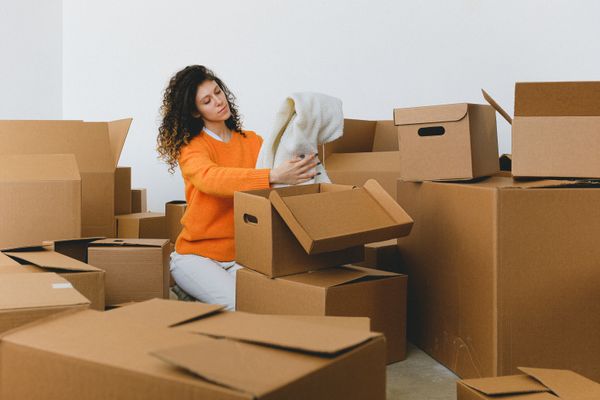
Quick answer
A first night box holds what your household needs for the first evening and morning in a new home: bedding, towels, toilet paper, soap, toiletries, medications, pajamas, a change of clothes, phone chargers, paper plates, snacks, coffee supplies, a box cutter, basic tools, and trash bags. Pack it last, label it clearly, and unload it first.
In this guide
What is a first night box?
A first night box (some people call it a moving essentials box or an open first box) holds everything your household needs for the first evening and the next morning in the new place, before anything else is unpacked. Think of it as packing for one night in a cabin with no supplies: a way to sleep, wash, eat, and charge your phone.
It matters because moving day ends late and tired. The bed frame may still be in pieces, the carton with the shower curtain could be any one of forty, and nobody wants to cut open boxes at 10 p.m. looking for toilet paper. One clearly marked box, or one per person in a bigger household, solves that.
First night box checklist: what to pack
Use this as a starting list of moving day essentials and adjust it for your household.
| Category | What to pack |
|---|---|
| Sleep | Sheets, pillows, and a blanket for each bed. An air mattress or sleeping bags if the beds will not be set up |
| Bathroom | Toilet paper, hand soap, a towel for each person, shower curtain and rings, toothbrushes, toothpaste, basic toiletries |
| Health | Daily medications, a pain reliever, bandages, glasses or contact lens supplies |
| Kitchen | Paper plates, cups, utensils, paper towels, a kettle or coffee maker with coffee, snacks, bottled water, a sponge and dish soap |
| Clothes | Pajamas and a change of clothes for the next day, plus work or school clothes if you need them |
| Power and light | Phone chargers, a power strip, a flashlight, a couple of light bulbs |
| Tools | Box cutter, scissors, screwdrivers, a hammer, tape, and the bag of bed frame hardware |
| Cleaning | Trash bags, all-purpose cleaner, rags or wipes |
Keep it to what fits in one large box or tote per person. A clear plastic tote works well because it is easy to spot in a room full of brown cardboard. If you use a regular carton, mark OPEN FIRST on the top and every side. Our guide on how to label moving boxes covers a system for everything else.
What to add for kids and pets
Children and animals notice the disruption more than adults do. A few familiar things go a long way on the first night in a new home.
- Babies and toddlers: diapers, wipes, bottles, formula or snacks, a portable crib, and the blanket or stuffed animal they sleep with
- Older kids: a night light, a favorite book or game, and their own pillow. Let them pack a small bag themselves
- Dogs and cats: food, bowls, leash, waste bags or a litter box with litter, medications, and their usual bed or crate
We have separate guides for moving with kids and moving with dogs and cats.
Want moving day to end with the beds already set up? Get a free, no-obligation quote and let our crew handle the heavy part.
What to keep with you instead of in the box
Some things should never leave your side on moving day, even in a well-marked box. Carry these in a bag or in your own car:
- IDs, passports, birth certificates, and Social Security cards
- Closing documents or your lease, and your moving paperwork
- Prescription medications
- Wallet, checkbook, spare cash, and keys for both homes
- Jewelry, small heirlooms, laptops, and anything you could not replace
Cleaning sprays and other household chemicals may need to ride with you too. See what movers won't move for the full list.
When to pack the first night box and where it rides
Start a running list a week or two ahead, and set an empty box or tote in a corner so items can go in as you think of them. Most of the contents are also what to pack last when moving, so the box cannot be closed until moving morning: the bedding you slept on, the coffee maker, the toiletries you just used.
- The night before: pack everything except what you need in the morning
- Moving morning: strip the beds, add the last items, and tape it shut
- Loading: put the box in your own car if there is room. If it goes on the truck, tell the crew it loads last so it comes off first
If our crew is doing the packing through our packing services, set your first night items aside in one marked spot, such as a bathtub or a closet with a note on the door, so they do not get boxed with everything else.
Packing a first night box for a long-distance move
On a local move the truck usually arrives the same day you do. On a long-distance move, your shipment may be delivered days after you get the keys, so one night of supplies is not enough. Pack a first week kit that travels with you instead:
- An air mattress or sleeping pads and bedding for everyone
- Several days of clothes, plus laundry soap
- One pot, one pan, a knife, a cutting board, and a place setting for each person
- A folding chair or two and a small lamp
- Anything you need for work or school during the first week
Our cross-country moving timeline shows where this fits in the larger plan.
How to use it on your first evening
When the truck pulls away, resist the urge to start opening boxes at random. Work through the essentials in this order:
- Make the beds. Even a mattress on the floor with clean sheets means the day has an end point
- Set up one bathroom. Hang the shower curtain, put out towels, soap, and toilet paper
- Plug in chargers and find the light switches while it is still daylight
- Eat something easy. Paper plates and takeout are fine tonight
- Stop. The rest can wait until morning
Tomorrow, follow a plan for what to unpack first so the house becomes livable room by room. If you would rather not lift a thing on moving day, our local moving crews handle the loading, the unloading, and the furniture assembly, and quotes are free.
Key takeaways
- A first night box covers sleeping, washing, eating, and charging phones for the first evening and morning
- Pack it last, mark OPEN FIRST on every side, and load it last or carry it in your car
- Documents, prescriptions, keys, and valuables stay with you, not in any box
- Kids and pets need their own familiar items on the first night
- For a long-distance move, expand it into a first week kit that travels with you